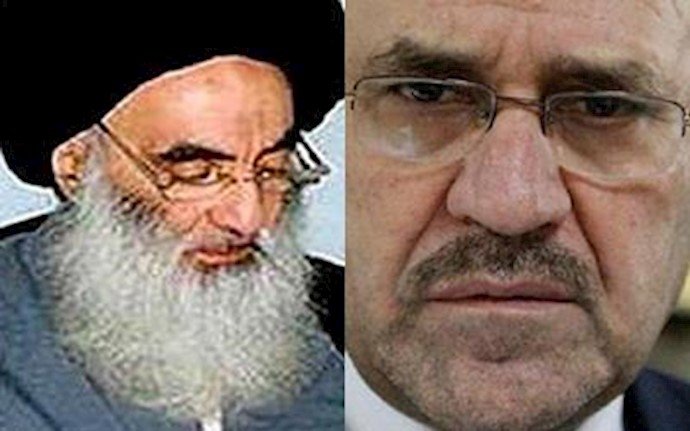
Grand Ayatollah Ali Sistani, probably the most revered of Iraq’s religious leaders, threatened Maliki of Shiite religious leaders taking a united stance against him, the Kuwait-based Al Seyassah daily reported on January 15th citing sources in Iraq on Tuesday.
Sistani also called on the National Alliance to set Maliki aside and find a replacement for the prime ministry if he orders force against the Sunni peaceful demonstrators in al-Anbar Province.
This source close to a Sistani representative said he has gained knowledge through the Shiite coalition that Maliki intends to hold an urgent National Security Council session including the ministers of Intelligence and Security, Interior, Defense, Justice and Foreign Affairs, in addition to a representative from the Finance Ministry – which is led by Rafe al-Issawi – to make the final decision to send a special military force from Baghdad to violently crackdown the al-Anbar protests and open the blocked international highway.
This source added Sistani and other religious leaders immediately held a session after learning of Maliki’s intention, and dispatched their representative to Baghdad to inform the Shiite coalition they must hold an urgent session of the Parliament and issue a vote of no-confidence against Maliki if he decides to use force against demonstrators in al-Anbar and other Sunni cities. They said coalition leaders have no other choice but replacing Maliki with another individual, in coordination with other political factions including the Kurdish alliance and Iraqiya Coalition led by Ayad Allawi. Replacing Maliki in these conditions and historic moments will save Iraq from an eroding sectarian war.
This informed source in Najaf reiterated the Shiite religious leaders’ representative informed Shiite coalition leaders in Baghdad that if the start of ‘spring’ in Iraq is necessary, it must be a united Sunni-Shiite spring because corruption, poor public service conditions and constant political crises are the characteristic of the current Maliki government.
The coalition viewed these remarks as Sistani not just resorting to setting Maliki aside, but also issuing a fatwa to the Shiite people in southern provinces for a peaceful revolution against the government, which has failed to improve Iraqi people’s conditions during the past 7 years of Maliki’s rule.
This Shiite source said Sistani’s brave positions, which is one of his most significant interventions in politics, was very vital at this timing because Shiite religious leaders are not certain Maliki will wage an armed war against Sunni cities or not, while Iranian entities have given him a green light to start this war.
This source said Sistani’s inner circle described Iran’s role in the crisis between Maliki and Sunni cities as unsuccessful because instead of calming the situation and finding a solution, they tried to support the prime minister.
This source reiterated Iranian diplomats in Baghdad sought to meet with Sistani, but he did not accept because he is not satisfied of Iran’s role. In this regard, religious bodies believe Iranian parties are essentially involved in suggesting security solutions for the al-Anbar protests dilemma.
According to this source, this rift between Sistani and Khamenei following the al-Anbar crisis has seriously deepened, especially due to the appeal to use military force against protesters. This means Sistani and other religious leaders will lessen and weaken Iran’s role in Iraq’s internal affairs in the following period.