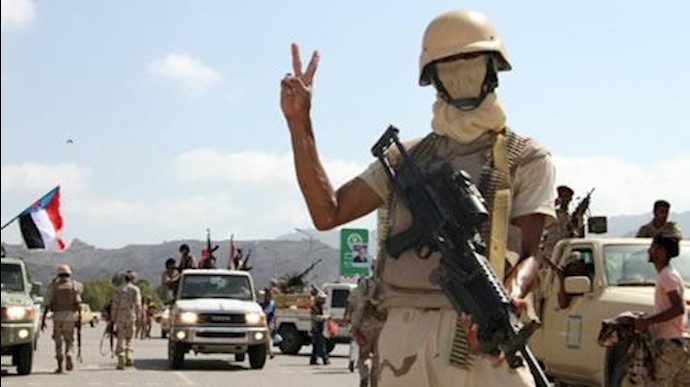
A ceasefire took effect in war-ravaged Yemen just before midnight Wednesday, under a United Nations plan, as warring parties face mounting pressure to end more than 18 months of fighting.
The UN special envoy for Yemen, Ismail Ould Cheikh Ahmed, had announced on Monday that the cessation of hostilities would take effect “at 23:59 Yemen time (2059 GMT) on 19 October 2016, for an initial period of 72 hours, subject to renewal”.
There was heavy fighting in Yemen hours before the truce began.
It is the sixth attempt to end the bloodshed since a Saudi-led Arab coalition intervened in March 2015 to support the government of President Abedrabbo Mansour Hadi after rebels overran much of Yemen.
Saudi Arabia and Washington accuse Iran of arming the rebels.
Civilians have paid the highest price in a country that was already the Arabian peninsula’s poorest.
Almost 6,900 people have been killed — more than half of them civilians — while another three million are displaced and millions more need food aid.
Clashes killed dozens of fighters across the country on Wednesday, including in combat near the Saudi border and around the rebel-held capital Sanaa, military sources said.
‘Urgent humanitarian assistance’
EU foreign policy chief Federica Mogherini late Wednesday said the truce should be a first step towards resuming the UN-led peace talks.
“The ceasefire must be respected by all sides and its duration extended so as to create the necessary conditions for such negotiations,” she said.
Mogherini added the ceasefire will allow urgent humanitarian assistance to reach large parts of the population that have suffered drastic shortages.
On Tuesday, US Secretary of State John Kerry encouraged the “unconditional renewal” of the ceasefire.
The last ceasefire attempt, which began in April alongside UN-brokered peace talks in Kuwait, failed with both the rebels and the coalition accusing each other of breaches.
In another major development, the US Navy for the first time targeted Huthi rebels directly.
On October 13 it hit radar sites which, the US said, were involved in missile launches against a US warship and other vessels.
Yemen’s Huthi rebels are allied with members of the security forces loyal to ex-president Ali Abdullah Saleh.
They control the capital Sanaa and other territory but coalition-backed forces earlier pushed them back from the southern port of Aden and adjacent areas.
‘More optimistic’
Both the rebels and pro-government forces have come under increased international pressure to silence their guns.
Hadi’s government said it would agree to the truce if rebels also adhered to it, monitored the ceasefire, and ended their siege of Yemen’s third city, Taez.
Shortly before the truce, the rebels’ military spokesman said his forces will respect the ceasefire as long as “the enemy” also abides by it on land, sea and air.
In fighting before the truce at least 30-Iran backed- Huthis and five pro-Hadi fighters died during heavy artillery bombardments near the Red Sea, in Hajja province, a loyalist statement said.
There were also coalition air strikes on rebel tanks and other reinforcements in the northern Saada province and Omran, a military source said.
East of the capital, in Marib province, the coalition intercepted two ballistic missiles, a loyalist officer said.
The UN’s humanitarian coordinator for Yemen, Jamie McGoldrick, on Wednesday told reporters he hopes the truce will provide a chance for aid workers to reach areas isolated by the fighting.
In spite of Wednesday’s violence, Mustafa Alani, a senior adviser to the Gulf Research Centre, said the prospects for peace were growing.
“I am more optimistic, actually, because the environment is completely different from the previous one,” he told AFP.
Source: AFP, 20 Oct. 2016