By James M. Dorsey and Zulkifli Mohamed sultan
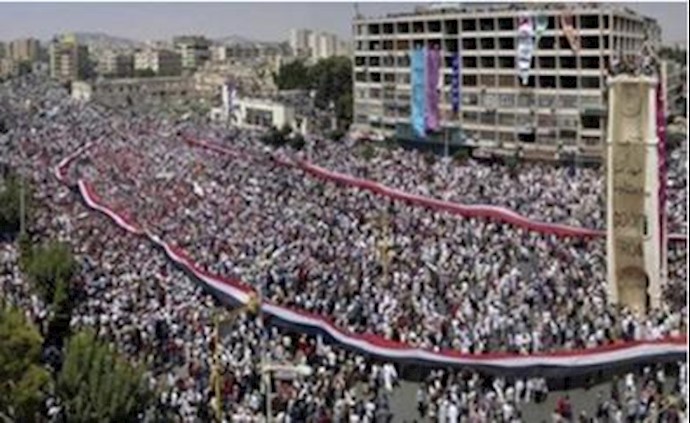
AL ARABIYA, 25 July 2011 – Syrian protesters and opposition forces are at a crossroads five months into mass anti-government demonstrations in defiance of a violent government crackdown.
The unflagging resilience and perseverance of the protesters in the face of a ruthless military has earned them international respect and admiration, but also created key issues they have to address to ensure that their effort to force the departure of Syrian president Bashar Al Assad is not stymied.
Addressing those issues puts a heavy responsibility on the shoulders of the leaders of the protesters and opposition groups as well as on the country’s Islamic clergy.
Two of the key issues — the danger of the protests turning violent and transforming into a sectarian from a purely political struggle — threaten to come to a head in Homs, Syria’s third largest city and become a focal point in confronting the Assad regime.
Avoiding sectarian strife is not only crucial to the future of the uprising but is also key to depriving the Assad regime of one of its central arguments in defence of its crackdown and refusal to entertain political and economic reform. This in turn will influence attitudes of the international community.
Mr. Assad has denounced the protesters as “armed gangs” supported by foreign powers and warned that Syria, an ethnic and religious mosaic, could descend into civil war.
Fears of increasing sectarian violence strengthen his argument and reinforce the reluctance of minorities and the business community to join the revolt. That is also likely to win him further support from Russia and China which have shielded him from condemnation in the United Nations Security Council.
Increased sectarian violence would furthermore make it difficult for the United States and Europe to support the protesters and increase Arab and Western concern that sectarian strife could spill across Syria’s borders into Turkey, Lebanon and Jordan.
The fears of sectarian violence of the kind that tore Lebanon and Iraq apart were fuelled by a series of ominous killings in Homs against Alawites, the sect to which Mr. Assad and his clan belong. The killings have heightened tensions between Homs’ majority Sunni Muslim population and an Alawite minority.
Following an attack on a Sunni mosque by Alawites, Sunnis reportedly reacted by abducting and killing three Alawites. In response, Alawites went on a rampage, looting and burning Sunni shops, killing three Sunnis. Afraid of retaliation, Alawites are fleeing the city.
In a Facebook page entitled Homs Revolution postings abused Alawites and urged Sunnis, who account for three quarters of the population, to take up arms against the government. The page has been endorsed by some 2,000 people.
Opposition groups have stressed the need to keep the protests peaceful despite the regime’s violence by which an estimated 2,000 people have been killed and thousands detained. Preventing violence would also limit the involvement of more radical religious forces. Sunni clerics have issued a fatwa, or religious edict, declaring the protests in line with Islamic law, but have yet to speak out forcefully against the sectarian violence.
Avoiding sectarian clashes and preventing violence are key prerequisites for an important task facing the opposition and the protesters: the formation of a council or shadow government that reflects the various strands arrayed against the Assad regime, including important segments of the country’s religious leadership.
The inspiration to do so came from the success of the Libyan rebels’ Transition National Council that has recently been recognised as the country’s sole legitimate governing authority by the United States, the European Union, NATO and the Arab League.
The discussion of a Syrian council that would give the opposition a degree of temporary unity notwithstanding the opponents’ reluctance to identify a leadership because they feared that would provide the Assad regime targets for assassination. One problem Mr. Assad’s opponents have to overcome is the fact that those in exile and those inside the country barely know each other. To do so, they are establishing committees that will create the basis for an assembly to choose a shadow government.
The creation of a Syrian shadow government is, however, unlikely to bring the fall of the Assad regime any closer. It will also not hasten international recognition even though the Obama administration and European leaders have asserted that President Assad has lost the legitimacy to govern his country. That position stops short of calling for the president’s departure. US Secretary of State Hillary Rodham Clinton recently encouraged the opposition to work for democracy in Syria, adding that it would “hopefully (be) with the government” of Mr. Assad.
The reluctance to call for Mr. Assad’s departure reflects concern about who might succeed him as well as a recognition that such a call would be worthless if the United States and Europe cannot enforce their will. US and European sanctions against Mr. Assad and his opponents have symbolic value but are ineffective, at least in the short term, in persuading the president to halt his crackdown and engage in a serious dialogue with his opponents about political and economic reform.
Tackling sectarian strife and violence and forging greater cohesion will allow the protesters and opposition to keep on track their struggle to topple the Assad regime. The effective stalemate between the government’s security forces and protesters on the streets of Syrian towns and cities constitutes an achievement. It is however a far cry from a victory that would open the door to reform. Getting there is likely to be a long and bloody process. The alternative, however, is more violence and potential defeat.
This article was first published as an RSIS Commentary by the Nanyang Technological University’s S. Rajaratnam School of International Studies.
(James M. Dorsey is a senior fellow at Nanyang Technological University’s S. Rajaratnam School of International Studies (RSIS) and the author of the blog, The Turbulent World of Middle East Soccer. He can be reached at questfze@gmail.com Zulkifli Mohamed Sultan is a research analyst at RSIS and can be reached at iszulkifli@ntu.edu.sg)