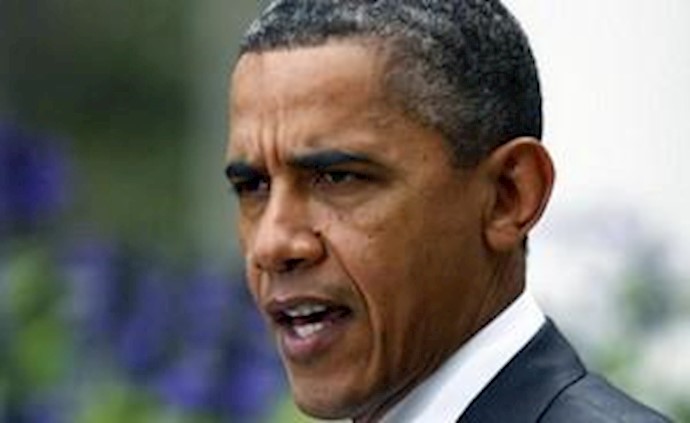
Al-Arabiya, Dubai, 25 Oct 2011 – U.S. President Barack Obama urged Egypt’s army chief to lift a state of emergency and end military trials for civilians, according to a telephone conversation announced Monday by the White House.
Obama spoke with Field Marshal Mohamed Hussein Tantawi, the head of Egypt’s Higher Military Council, to underscore full support for Egypt’s transition to democracy, the White House said, according to Reuters.
“The two leaders agreed that Egypt’s upcoming elections must be free and fair and be held in accordance with democratic standards,” with Obama noting that “the outcome of the election is for the Egyptian people to decide,” the White House said in a statement.
Obama also asked Tantawi to “reaffirm the close partnership between the United States and Egypt,” the statement said.
Obama and Tantawi also “underscored their intention to continue to cooperate closely on counter-terrorism and regional security,” the statement said.
Egypt has been ruled by the Supreme Council of the Armed Forces since the ouster of longtime President Hosni Mubarak in February in the wake of huge anti-government protests.
A caretaker government is in place in the run-up to legislative elections starting on Nov. 28.
A new constitution is to be drafted by Egypt’s new government and the army has promised to hand over power once a new president has been elected but no date for a presidential vote has yet been set, according to AFP.
Activists involved in this year’s uprising have said that the army has been reluctant to carry out genuine reforms. Heightened frustration has led to protests, strikes and deadly clashes.
Meanwhile, a top U.S. trade official said on Monday that the United States is eager to expand trade with Egypt to help the world’s most populous Arab country complete its transition to democracy.
“The United States greatly values its economic relationship with Egypt, which is a key strategic partner,” Deputy U.S. Trade Representative Miriam Sapiro said in a statement after a meeting near in Jordan with Egyptian Minister of Industry and Trade Mahmoud Eisa.
“With this first high-level meeting with Minister Eisa, we are advancing our work together to overcome obstacles to increased trade and investment and to pursue actions to improve regional economic integration,” Sapiro said, according to Reuters.
Eisa will visit Washington next month for further talks, said Sapiro, who has played a key role in shaping the U.S. economic response to the events of the “Arab Spring.”
Two-way goods trade between the United States and Egypt increased more than 30 percent in 2010 to $9.1 billion, while U.S. investment in Egypt rose 28.4 percent to $11.7 billion.
Trade has remained mostly steady this year, totaling $6 billion through the first eight months, despite mass protests in Tahir Square in January and February.
Obama in May outline a new trade and investment partnership initiative to respond to the rapid transformation underway in the Arab world.
Sapiro has previously said the initiative would encompass the entire Middle East and North Africa region, with an emphasis on Egypt and Tunisia where visible progress could bolster democratic change and economic reforms elsewhere.
One goal of the Obama initiative is to construct a regional free trade arrangement among Middle East and North African countries willing to adopt high standards of reform and trade liberalization, she said in that speech.