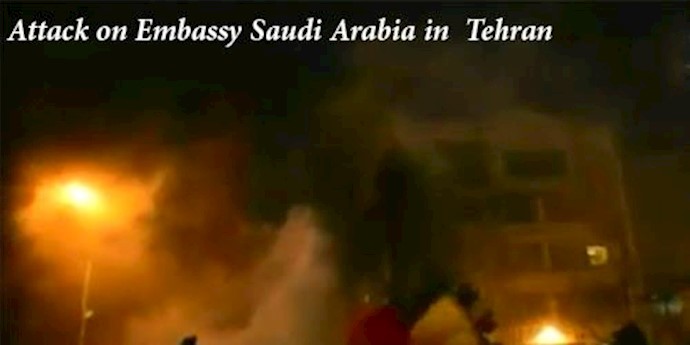
TEHRAN —- Iranian leaders are suddenly finding themselves mired in a new crisis at a time they had been hoping to emerge from international sanctions as an accepted global player, but instead it finds itself once again characterized by countries in the region as a provocateur in the region and abroad New York times reported on Jan. 4, 2016.
After the embassy attack, Saudi Arabia officially severed diplomatic ties with Iran, and Bahrain and Sudan followed suit on Monday. The United Arab Emirates, one of Iran’s most important regional trading partners, decided to downgrade its relations.
Just in December, the Saudi and Iranian foreign ministers sat directly across from each other during a high-level meeting in New York to talk about Syria. Talks among the warring parties in Syria are scheduled to start on Jan. 25 in Geneva. There was little clarity before about who would represent either the Syrian government or the various opposition groups fighting it, and now, after the diplomatic schism, there seemed to be even more confusion.
Mr. Ban — who has repeatedly urged the two countries to cooperate on regional conflicts — called the break in Saudi-Iranian relations “deeply worrying.”
The Saudi ambassador to the United Nations sought to temper apprehensions about whether the new tensions would bear negatively on the fragile peace talks for Syria and Yemen. “From our side it should have no effect because we will continue to work very hard to support the peace efforts,” Ambassador Abdallah Y. Al-Mouallimi said.
Some Iranian officials had hoped that January would become a celebration of Iran’s growing importance.
Now, some Iranians are wondering whether Saudi Arabia has again gained the upper hand in the new diplomatic crisis.
However, there have been several flash points between Iran and Saudi Arabia in recent months, with the nuclear deal and the wars in Syria and Yemen driving most of the tension.