AL ARABIYA , 18 April 2012 – U.S. Secretary of State Hillary Clinton on Wednesday warned Syrian President Bashar al-Assad of tougher measures if he squanders his “last chance” by failing to implement the Kofi Annan peace plan.
“It is obviously quite concerning” that, while U.N. observers are starting to deploy in Syria, the “guns of the Assad regime are once again firing in Homs, Idlib and elsewhere”, Clinton told reporters in Brussels.
On Wednesday, at least 32 people were killed by army gunfire across Syria today, mostly in Idlib and Homs, Local Coordinating Committees said.
Three civilians were killed as regime forces launched a fresh bombardment of a rebel neighbourhood of the flashpoint central city of Homs, said the Syrian Observatory for Human Rights.
Four others, including a nine-year-old, were killed elsewhere, the Britain-based watchdog added.
Seven government troops were also killed in a roadside bomb on the outskirts of the northwestern town of Idlib, where fighters of the rebel Free Syrian Army have been active.
“We are at a crucial turning point,” the chief U.S. diplomat said on the eve of a high-level meeting in Paris designed to consider further pressure on Assad.
U.N.-Arab League special envoy Kofi Annan has proposed a peace plan calling for the withdrawal of heavy weapons and troops from Syrian population centers, humanitarian assistance, the release of prisoners and free movement and access for journalists.
Either the international community succeeds in “pushing forward” Annan’s six-point plan or “we see Assad squandering his last chance before additional measures have to be considered,” Clinton said.
She talked of increased sanctions but declined to answer a question on whether it was fine for other countries to arm the rebels − a stand taken by Saudi Arabia and Qatar.
Speaking after talks with NATO foreign and defense ministers in Brussels, Clinton simply said the United States “is not providing lethal arms” to the opposition and is instead sending communications equipment and other non-lethal aid to them.
France said that 14 foreign ministers, including Clinton, would attend a meeting on Syria in Paris on Thursday to send a “strong” message to Assad’s regime to implement the Annan plan.
Clinton said she looked forward to her consultations in Paris.
U.N. observers ‘lack ability to monitor Syria’
U.N. observers in Syria are not being given the necessary freedom to monitor a halt to hostilities, the U.S. ambassador said Wednesday, adding that the Security Council will examine its next move in the crisis next week.
The council will await reports from U.N. Secretary General Ban Ki-moon, expected Wednesday, and from U.N.-Arab League envoy Kofi Annan before discussing whether to send a full observer mission to Syria, ambassador Susan Rice told reporters.
An advanced party of 30 unarmed military observers started arriving in Damascus Sunday, but has not yet started monitoring a cessation of hostilities that officially started last week.
The U.S. ambassador again raised doubts over the Security Council agreeing to send the full 250 member mission to the country where the U.N. says more than 9,000 people have died in the last 13 months.
“We have a very small number of observers now on the ground and it seems that small number is having difficulty with the freedom that we all expected and that is required,” Rice said.
The Security Council had clearly insisted “that there needs to be a sustained cessation of violence, there has to be the ability for this advanced contingent to be able to operate and move freely and unimpeded,” the envoy added.
“I think there is reason on both counts to be concerned that thus far those conditions are not in place.”
The Security Council passed a resolution on Saturday allowing the advanced party of up to 30 observers, who are still negotiating a protocol with President Bashar al-Assad’s government to allow them to carry out their work across the country. The government said Wednesday that the deal was nearly complete.
Under the resolution, U.N. chief Ban Ki-moon was to send a report to the Security Council later Wednesday on the work of the observers up to now.
Annan had been expected to brief the Security Council this week, but his talks with the 15-member council AL ARABIYA, 18 April 2012 – A report issued by the London-based International Centre for Development Studies confirmed that Iran is stealing large amounts of oil from neighboring Iraqi fields.
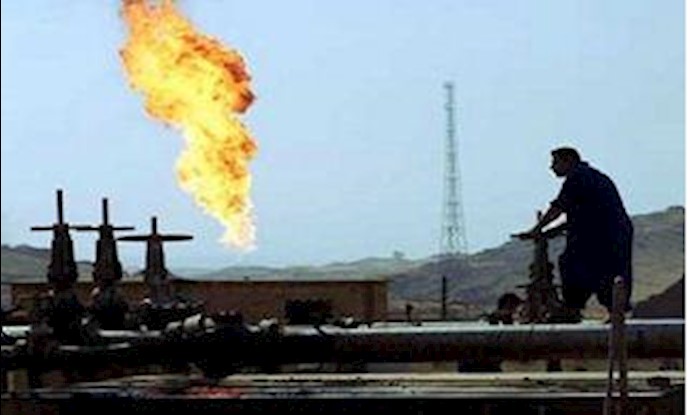
According to the report, Iran steals $17 billion worth of Iraqi oil from fields that are mostly Iraqi and not shared between the two countries. Those fields are home to more than 100 billion barrels and the majority of them are inside the borders of Iraq.
The amount of oil Iran takes from Iraq, the report explained, is estimated at 130,000 barrels and mainly comes from four Iraqi fields: Dehloran, Naft Shahr, Beidar West, and Aban. Iran’s violation of Iraqi oil rights also extends to the fields of al-Tayeb and Fakka as well as parts of Majnoun field with an estimated 250,000 barrels.
The total amount of oil Iran steals from Iraq is estimated at 14 percent of Iraqi oil revenue.
The report points out that Iran is using Iraqi oil unilaterally even though the two countries have previously agreed on forming joint committees to regulate the use of oil in border fields. In addition, excavation activities Iran carries out on the border have a negative impact on the quality of Iraqi oil since it affects the pressure in Iraqi fields.
According to the report, the transfer of Iraqi oil to Iran is made possible through smuggling networks spread across the borders that take to Iran an average of 35,000 barrels a day.
The smuggling of Iraqi oil to Iran plays a major role in abating the effect of the economic sanctions imposed on Iran. The stolen oil is later re-exported to Iraq after being manufactured into a variety of oil products or into electric power.
Such export deals are done under the agreement Iraq signed with Iran and which enables the first to import four million barrels of fuel daily from the second in order to make up for shortage of energy. Meanwhile, Iran’s daily production of fuel has increased by 20 million liters in 2012.
The report pointed out that the Iraqi Ministry of Petroleum has not been diligent enough to install electronic meters that would detect the amounts of extracted and transferred oil. The ministry also refused applying the satellite vigilance system that monitors the in and out of oil.
The report described the Iraqi government’s attitude as “surprising” since it is too lenient with Iran while it imposes a lot of restrictions on its oil partners inside Iraq.
For example, the Iraqi central government is boycotting companies that signed oil contracts with the autonomous region of Kurdistan despite the negative impact this is bound to have on the Iraqi national economy.
The Iraqi economy is also expected to suffer another blow, the report stated, after the agreement that allows the Syrian Oil Company to carry out excavation operations in southern Iraq despite the sanctions imposed on the Syrian regime and the possibility of similar sanctions on Iraq following this agreement.
In the report, the International Centre for Development Studies called upon the Iraqi government to demarcate the borders of its oil fields and to develop local oil manufacturing facilities. This, the report highlighted, is especially important now with Iran trying to sign contracts with Russian and Chinese oil companies that allow the three countries to use Iraqi oil fields in order to produce 5.2 million barrels daily by the year 2012.
According to the report, Iran now has the right to supervise oil production in the Yadfaran oil field in southeastern Iraq after signing a deal with the Chinese company Sinopec.
This deal will deprive Iraq of benefiting from the production of this field, home to almost 12 billion barrels of crude oil and 12.5 cubic meters of natural gas in addition to 1.9 billion barrels of oil concentrates.
(Translated from Arabic by Sonia Farid)
are now only expected next week, Rice said.
“And in the light of these discussions and assessments the council I’m sure will work towards its consideration of the recommendations” made by Ban and Annan, Rice said.
The U.S. envoy said a U.N. mission in Syria “needs to be able to operate with the independence, the freedom of movement, the freedom of communications − all of the traditional freedoms that are necessary for an effective U.N. presence anywhere in the world.
“We can’t accept a set of circumstances in Syria that we wouldn’t accept anywhere else,” she said.