After the 1979 revolution that brought Shi’ite Muslim clerics to power, Iran has typically been using hostages to extract concessions from its western adversaries.
Early on, it held 52 hostages taken from the U.S. embassy in Tehran for 444 days. That incident ranked alongside Iranian-backed suicide bombings against Western embassies and troops in Lebanon, the hijacking of planes and the kidnapping of Western hostages in the country.
All this left deep scars and incited hostility towards Iran as an outlaw, in the region and the world.
Washington remains far from enamored of the mullahs ruling in Tehran, and is formally committed to Iran’s arch-rival, Saudi Arabia.
Saudi Arabia, however, remains implacably at loggerheads with Iran.
The Saudis have been badly rattled by Iran’s success in forging a Shi’ite axis stretching from Iraq through Syria to Lebanon.
Riyadh says Iran is also behind unrest in neighboring Bahrain, which has a Shi’ite majority, as well as the insurgency of Shi’ite Houthis in Yemen, where the Saudis launched an air war last year. It also believes Tehran is stirring up Saudi Arabia’s Eastern Province, which contains nearly all the kingdom’s oil and most of its marginalized Shi’ite minority.
Riyadh appears defensive – and unpredictable since last year’s succession of the elderly King Salman, who has vested vast power in his young son, Prince Mohammed bin Salman, Saudi watchers say.
Saudi officials say their regional policy is coherent, not ideologically or religiously motivated.
“We will not allow Iran to destabilize our region. We will not allow Iran to do harm to our citizens or those of our allies and so we will react. But it is a reaction in response to Iranian aggression,” Foreign Minister Adel al-Jubeir told Reuters this month.
Ali al-Amin, a Lebanese analyst and researcher,
says seems to believe
“The fight with Iran strengthens Riyadh internally, it strengthens its nerve,” says al-Amin. “Its purpose is to protect the kingdom and rally all Sunnis behind it.”
But Iran, too, has its vulnerabilities. It faces the dilemma of how far to liberalize once its economy reconnects to world markets and investment creates new power groups.
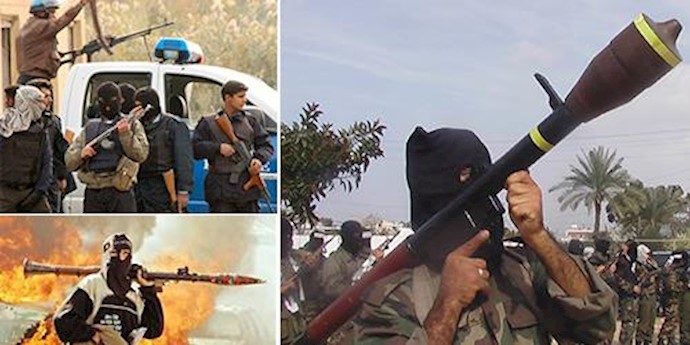
Tehran has advanced its interests in countries such as Lebanon, Iraq and Syria by bypassing state institutions with unstable alternatives such as militias, its principal weapon of influence, as these states were cracked open by war or invasion, leading to de facto partition.
“Iran’s role was always built on divisions and fractures in society and not through government institutions,” al-Amin said. “The Iranian project cannot survive without crises, it has no option for stability through ties with states. In Syria, all the Iranian influence is outside the state and the same in Iraq and Lebanon.”
Iran
will need to compromise and that includes accepting a less assertive role in the affairs of Iraq, Lebanon and Syria
“Iran
has to define its role. It cannot preserve its presence in Syria and Lebanon,” veteran Lebanese commentator Sarkis Naoum told Reuters.
Faisal al-Yafai, commentator at the The National newspaper in the United Arab Emirates, said Tehran must review its support for various armed groups in the region. If Iran “wants genuinely to be part of the international community it has to obey the rules of the international community,” he said.