HIROSHIMA (JAPAN) – US Secretary of State John Kerry said he was “deeply moved” by his visit Monday to the Hiroshima atomic bomb memorial — and expressed hope that President Barack Obama would go there too.
“I want to express on a personal level how deeply honoured I am, how deeply moved I am” to be the first US secretary of state to visit the memorial, he told reporters after his visit during a G7 meeting in the Japanese city.
He described the memorial as “extraordinary” and called it a “gut-wrenching display that tugs at all your sensibilities as a human being”.
Kerry was the highest-ranking US administration official to pay respects at the spot where American planes launched the world’s first nuclear attack, in 1945.
About 140,000 people died from the blast or later from severe radiation exposure.
The atomic bombing of Nagasaki followed three days later and Japan surrendered within a week, ending World War II.
“Everyone should visit Hiroshima, and everyone means everyone,” Kerry said.
“I hope one day the president of the United States will be among the everyone who is able to come here,” he added.
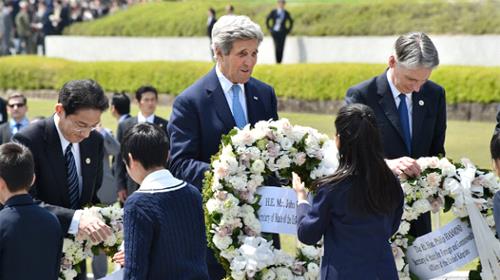
John Kerry on Monday became the first US secretary of state to pay his respects at Hiroshima’s memorial to the 135,000 victims of the 1945 US nuclear attack.
But he declined to elaborate on whether such a visit — it would be a first by a sitting US president — was likely.
“Whether or not he can come as president, I don’t know. That is subject to a very full and complicated schedule that the president has to plan out way ahead of time.”
White House officials have said Obama is considering making a stop in Hiroshima during a planned visit to Japan next month for a G7 summit.
Kerry visited the memorial with other Group of Seven foreign ministers who were wrapping up a two-day meeting in Hiroshima to prepare for the summit.
That meeting will take place in a different region of the country. But speculation has risen that Obama, who has called for a world free of nuclear weapons, could journey to Hiroshima.
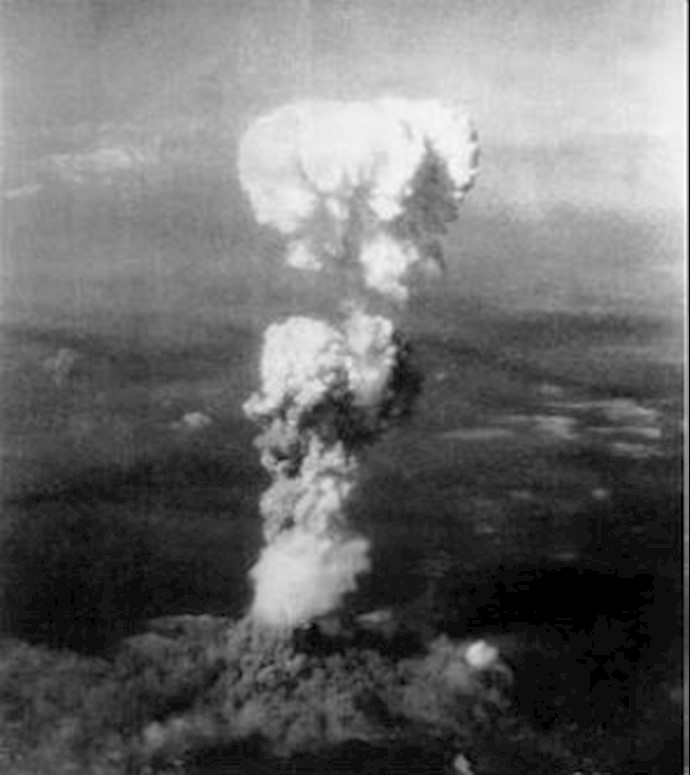
Ahead of the visit to Japan, a US State department official confirmed that Kerry would not apologise for the attack at 8:15 am on 6 August 1945, when the US B-29 bomber named Enola Gay dropped a uranium bomb nicknamed “Little Boy” on the city of Hiroshima.
“If you are asking whether the secretary of state came to Hiroshima to apologise, the answer is no,” an official, who asked not to be named, told reporters travelling with Kerry.
“If you are asking whether the secretary and I think all Americans and all Japanese are filled with sorrow at the tragedies that befell so many of our countrymen, the answer is yes.”
Kerry and other State Department officials had to tread carefully on this tour which is considered a test run for a potential visit by President Barack Obama next month.
“While we will revisit the past and honor those who perished, this trip is not about the past,” Kerry said before a meeting with the Japanese foreign minister. “It’s about the present and the future particularly, and the strength of the relationship that we have built, the friendship that we share.”
This picture of the mushroom cloud over Hiroshima was taken by Enola Gay tail gunner, Staff Sergeant George R. Caron
’Stark, harsh’ memorial
Accompanied by foreign ministers of the Group of Seven (G7) advanced economies, Kerry toured the Hiroshima Peace Memorial and Museum, whose haunting displays include photographs of badly burned victims, the tattered and stained clothes they wore and statues depicting them with flesh melting from their limbs. “Everyone in the world should see and feel the power of this memorial. It is a stark, harsh, compelling reminder not only of our obligation to end the threat of nuclear weapons, but to rededicate all our effort to avoid war itself,” Kerry wrote in the museum guestbook.
Kerry and the G7 foreign ministers issued a statement calling for a “world without nuclear weapons”.
“We reaffirm our commitment to seeking a safer world for all and to creating the conditions for a world without nuclear weapons in a way that promotes international stability,” the group said.
“This task is made more complex by the deteriorating security environment in a number of regions, such as Syria and Ukraine, and, in particular by North Korea’s repeated provocations,” it added.
The US Air Force dropped two nuclear weapons on Japan in the closing weeks of the Second World War, first on Hiroshima and then three days later at Nagasaki, which which together killed about 225,000 people. In all, an estimated 350,000 died within five years. The bombings forced Japan to surrender, initiating the end of World War Two.
Source: News Agencies, April 12