Catherine Philp, Hugh Tomlinson, Martin Fletcher
Times online, June 9, 2010
Iran’s state shipping company is carrying out a systematic campaign of deception to protect its international trade from looming sanctions at the United Nations Security Council.
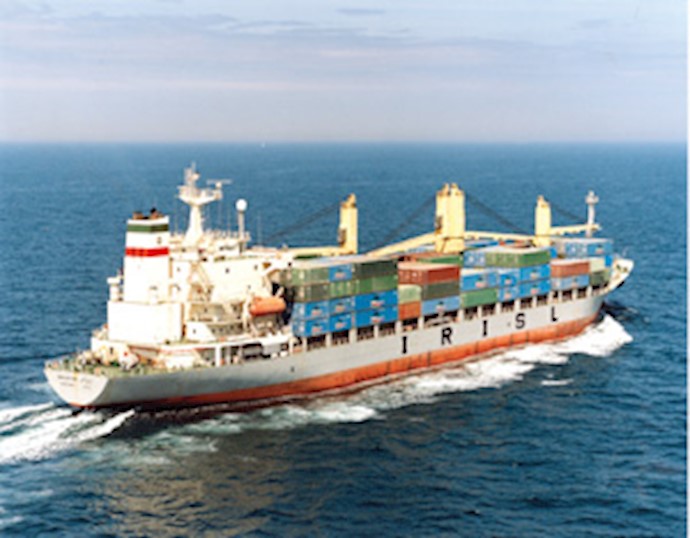
The Islamic Republic of Iran Shipping Lines (Irisl), which has close links with the country’s Revolutionary Guards, is to be singled out in sanctions that are being voted on in the Security Council today.
Fresh concerns over how to implement the sanctions have emerged, however, after revelations about how the company evaded embargos by renaming scores of ships and setting up front companies to disguise their ownership.
According to a report in The New York Times published yesterday, as many as ten blacklisted ships are still insured in Britain and Bermuda and an unknown number whose ownership has been better disguised may have links to Britain.
Irisl was put on a US blacklist in 2008 for its role in transporting supplies for Iran’s suspected nuclear weapons programme, helping it to circumvent existing sanctions. Britain placed Irisl on a blacklist last year and the rest of the European Union is expected to follow new sanctions with its own embargo.
The organisation’s campaign of deception is outlined in a report released last month by the Wisconsin Project on Nuclear Arms Control into Irisl’s reconfiguration. The report details at least 80 ships out of a known fleet of 123 that have been renamed in the past two years, with telltale names such as Iran Gilan substituted by innocuous-sounding English titles such as Bluebell and Angel. One was renamed Alias.
The report named “shell companies” that have been set up in locations from Malta to Germany to run supposedly independent shipping lines.
According to records held by IHS Fairplay – formerly Lloyd’s Register Fairplay – only 46 of Irisl’s fleet are still formally operated by the company or its blacklisted subsidiaries. The remaining 73 are on record as being owned and operated by suspected shell companies. Four other ships were scuttled. The New York Times traced several of those companies back to Irisl headquarters in Tehran.
One such concern, Smart Day, was traced back to companies in the Isle of Man linked to a British shipping consultant, Nigel Malpass. Mr Malpass could not be reached for comment yesterday. He told the US newspaper that he had set up companies for Irisl in the past but had since disassociated himself.
Sanctions imposed by Britain, the leading centre for shipping insurance, led to the cancellation of policies on many Irisl-owned vessels but by the time they were enacted late last year many ships had successfully obscured their ownership.
Whitehall officials said that they had been concerned for some time about Irisl’s use of shell companies to evade sanctions. However, Lloyd’s, the shipping insurers, told The Times that its efforts to enforce sanctions were hampered not only by Iranian deception but also by the differing sanctions regimes in different countries.
“The Lloyd’s market has systems and controls in place to comply with international sanctions and, while we support their concept, we recognise that there are inconsistencies in policies of individual nations which means sanctions do not always achieve their aims,” a spokesman for Lloyds said. “We urge that nations need to be more co-ordinated in their sanctions policies and their underlying targets.”
The US Treasury admitted yesterday that it had not always been able to keep track of the name changes, adding to the risk that American companies were unwittingly doing business with Irisl. Many of the organisation’s vessels still appear on the blacklist under their original names, now outdated, and no new shell company names have been added to the blacklist since it was first drawn up.
“We are dealing with people who are as smart as we are and of course they can read our list,” Stuart Levey, the Treasury Under-Secretary for Terrorism and Financial Intelligence, said. The revelations, he said, “reinforce what we have told Government and the private sector – that the Iranian Government engages in deception, so they need to look beyond lists of sanctioned entities to protect themselves from potential illicit transactions.