The Financial Times, August 12 2010 – Inside Iraq’s heavily fortified parliament, where the US has clung to hopes of incubating democracy since its 2003 invasion, offices lie empty and secretaries sit idly waiting in case their bosses decide to show up.
Where officials are at their desks, the mood is bleak as the protracted process to form the next government enters its sixth month.
There are few expectations that a resolution is near, even as Washington ramps up the pressure on Nouri al-Maliki, the prime minister, and Iyad Allawi, his arch rival, to reach a power-sharing agreement.
Asked who will form the next government, a parliamentary official says “go and ask Paul”, referring to the octopus that predicted winners and losers at the football World Cup.
“Ten per cent of parliamentarians [those involved in political negotiations] are active, the other 90 per cent have nothing to do,” he adds. “The whole of Iraq is a vacuum, for God’s sake. You know when you get a black hole in the universe? It’s exactly the same now.”
The political standoff has gripped Iraq since inconclusive March 7 elections saw Iraqiya, a secular coalition led by Iyad Allawi, win two more seats than State of Law, a predominantly Shia alliance, headed by Nouri al-Maliki, the prime minister. With no bloc near to a majority in the 325-member parliament, the groups need to form alliances with rivals to lead the next government – something they have not come close to achieving.
Frustrated US officials have intensified efforts to find a solution as the clock ticks down on an August 31 deadline for Washington to declare the end of combat missions in Iraq and reduce its troop numbers in the fragile country to 50,000.
The pressure is being directed primarily at Mr Maliki and Mr Allawi, with US officials believing that an alliance between their two movements is the most feasible scenario, particularly as an earlier agreement between State of Law and other Shia Islamist groups has fallen apart.
But there is deep mistrust between Mr Allawi and Mr Maliki, and both insist they have the right to be prime minister.
In a bid to break the deadlock, the US is pinning its hopes on an initiative that would devolve prime ministerial powers through the establishment of a new political council for national strategy.
The inference is that Mr Maliki could then remain as prime minister with watered-down powers, while Mr Allawi heads what, in theory, would be an influential body.
“This is a way to address the criticisms that have been made of Maliki about his style of government, if you believe Iraqiya, that he was behaving extra-constitutionally, and this is a way to dilute some of his powers if he serves a second term,” says a senior US official.
The details of the powers and composition of the council are still being discussed, but it would include senior ministers, such as defence and interior, as well as the president and prime minister, and would have an executive role.
There are, however, disagreements as to whether the council would be able to issue directives, which Iraqiya wants, whether it would only issue guidelines or whether there would be a compromise between the two.
Since coming to power in 2006, Mr Maliki has been accused by critics of being increasingly authoritarian and of concentrating state powers, particularly control of security forces, around his office.
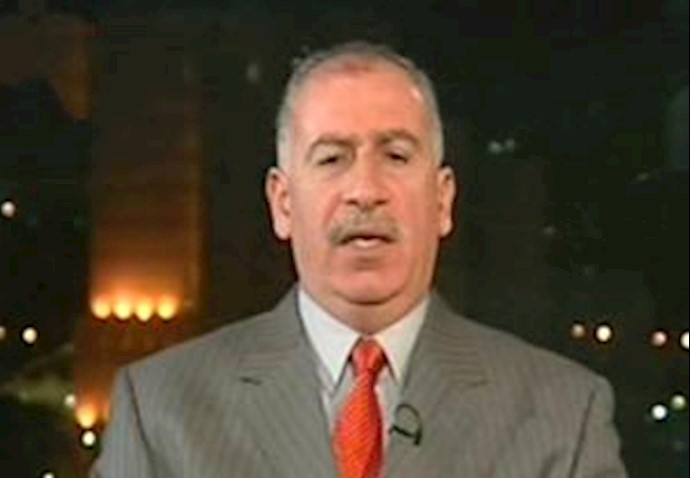
“The problem we are experiencing right now is some who hold power are not willing to let go, and this is the feeling now with Maliki,” says Osama Nujaifi, a senior member of Iraqiya who is leading its negotiations with State of Law. “We have got to make sure whoever is prime minister will never turn into a dictator.”
He says negotiations are ongoing, but insists Iraqiya would not accept Mr Maliki as prime minister.
But there is a sense that the US has concluded that Mr Maliki is the standout Shia candidate, even though his insistence on retaining office has been a major stumbling block to the formation of a government.
Mr Allawi is also a Shia, but his movement is dominated by Sunni Arabs, causing diplomats to question whether he would be accepted by Shia Islamist groups.
“It [the council proposal] is the only game in town but it will need a huge amount of effort from everybody,” says another foreign diplomat.
The challenge is getting Mr Maliki and Mr Allawi to agree on an arrangement that suits both parties. Creating a council would also require legislation, which could be difficult to pass.
The senior US official, however, says the only clear alternative would be that “this thing just continues to drag on”.
That would “risk elevating the frustrations, even anger, in some areas and misbehaviour on the part of militias or al-Qaeda,” the official says. “For the time being, we don’t see it happening, but that’s not to say that it can’t happen.”
Back in the lifeless parliament, however, the official has little faith in any quick resolution, noting that the assembly has not sat to discuss serious government business since January.
“The major problem is the lack of trust between the politicians, so you can promise that ‘you will get this and I will get that, but I don’t believe you’.”