Al Arabiya with Reuters, 28 Dec 2011 – The head of the Sunni-backed Iraqiya political bloc said Iraq “stands on the brink of disaster” and issued a list of demands on Wednesday in a political crisis triggered by charges against a Sunni leader.
Iraqiya leader Iyad Allawi, in an editorial for the New York Times, said Iraq was heading towards a “sectarian autocracy that carries with it the threat of devastating civil war.”
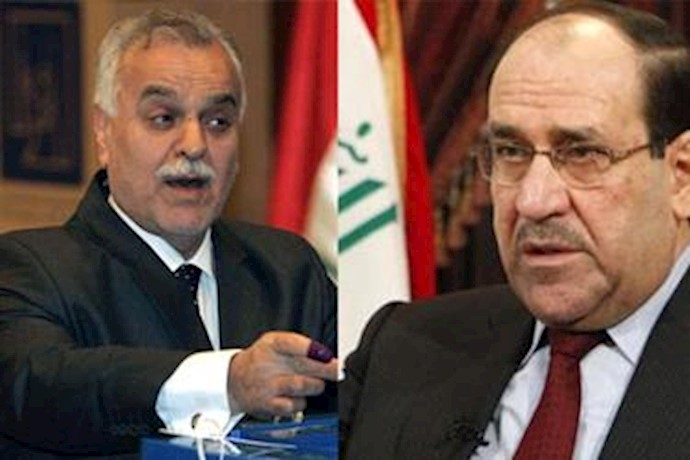
Sectarian tensions are running high in Iraq ten days after the last U.S. troops pulled out. Shiite Prime Minister Nuri al-Maliki has sought the arrest of Sunni Vice President Tariq al-Hashemi, accused of running death squads.
Allawi told Al Arabiya on Tuesday that there was a kind of agreement among the different political parties in Iraq to organize early elections in order to avoid further complication of the current political crisis in the country.
The commentary, co-authored by Iraqiya officials Osama al-Nujaifi, the parliament speaker, and Rafie al-Esawi, the finance minister, said bloc leaders were being “hounded and threatened by Mr. Maliki, who is attempting to drive us out of Iraqi political life and create an authoritarian one-party state.”
The political crisis, Iraq’s worst in a year, threatens Maliki’s fragile year-old coalition government, an alliance of Shiite, Sunni and Kurdish political blocs.
Nujaifi and Iraqi President Jalal Talabani, a Kurd, on Tuesday proposed a national conference of political leaders to try to resolve the crisis and said allegations against Hashemi should be left to the courts, according to Reuters.
But Allawi, in a separate statement, listed a series of demands before he would agree to any conference, including the release of “all detainees held on false charges” and the formation of a panel of top politicians to oversee and prevent interference in legal procedures.
Iraqiya has criticized a recent arrest campaign against hundreds of former members of Saddam Hussein’s Baath Party over what some officials said was a plot to seize power after U.S. troops left.
Allawi also demanded the government implement an accord reached last year before the coalition government was formed that would have given him leadership of a new national policy council. Allawi has accused Maliki of reneging on the pact.
Allawi said “all options are still open” to resolve the crisis, including early elections and the possibility of a new candidate for prime minister.
Last Friday, with Sunni imams warning Maliki was seeking to foment sectarian divisions, protesters were on the streets of Sunni-dominated Samarra, Ramadi, Baiji and Qaim, many waving banners in support of Hashemi, and criticizing the government, according to Reuters.
The crisis could scuttle a delicate power-sharing agreement that splits posts among Shiite, Sunni and Kurdish leaders just days after the last American troops withdrew nearly nine years after the invasion to oust Saddam Hussein.
“What’s happening in Iraq is settling political scores,” Allawi, Maliki’s predecessor, told Al Arabiya earlier in the week.
An emergency session in parliament among leaders of political blocs to debate the crisis was cancelled on Friday.
Both Iraqiya and the Sadrist movement of anti-American Shiite cleric Moqtada al-Sadr have called for new elections, currently not due until 2014.
Iraq’s latest crisis was triggered by the charges against Hashemi and Maliki’s request to parliament to fire Sunni Deputy Prime Minister Saleh al-Mutlaq. Hashemi and Mutlaq are two of the most senior figures in Iraqiya.
In the editorial, Allawi, a former prime minister, said Maliki had “laid siege to our party,” surrounding leaders’ homes and offices in Baghdad’s Green Zone with government forces.
“…as Iraq once again teeters on the brink, we respectfully ask America’s leaders to understand that unconditional support for Mr. Maliki is pushing Iraq down the path to civil war,” the editorial said.
“Unless America acts rapidly to help create a successful unity government, Iraq is doomed.”
U.S. and Iraqi officials have been engaged in a flurry of talks to try ease tensions in a crisis that could have wider impact in the region with Iraq’s Sunni and Shiite neighbors.