The Washington Post, 10 Oct 2012 – Iran is providing crucial equipment and technical help to Syria in its effort to track opposition forces through the Internet and other forms of electronic surveillance, according to U.S. officials.
The aid is the latest example of how Iran is helping Syria in its battle against rebel forces threatening the regime of President Bashar al-Assad.
The technical assistance is coming mainly through Iran’s Ministry of Intelligence and Security, the officials said.
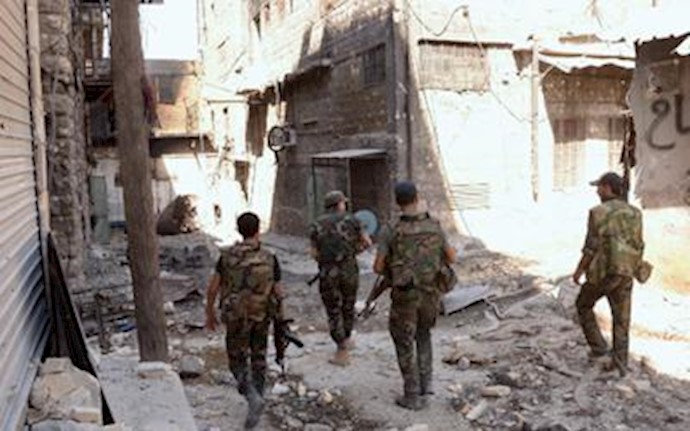
Syrians take refuge as fighting rages on. The Turkish border has become the site of many refugee camps for Syrians fleeing their homeland.
Iran, which has long experience in tracking dissidents internally, has supplied surveillance and communications gear, as well as technical support in computer network surveillance, said one intelligence official.
Like others interviewed, he spoke on condition of anonymity because of the topics sensitivity.
Among the tactics in which Iran is advising the Syrians is how to gain access to Web forums and chat rooms, where they pose as opposition members to identify and track targets, the intelligence official said.
Syrian agents are then dispatched to kill the rebels, the officials said.
An array of sophisticated techniques used to entrap Syrian opposition activists has already been unearthed by tech privacy and security groups.
Pro-government hackers have covertly installed spy ware on activists’ computers by sending them e-mail and Skype messages purporting to be from opposition sympathizers that include attachments containing surveillance tools, said Eva Galperin of the Electronic Frontier Foundation, an Internet privacy group based in San Francisco.
The surveillance software can record key strokes, steal passwords, turn on Webcams and record audio conversations.
The kind of people who would find this information useful, Galperin said, is the Syrian government.
Iran’s electronic assistance began at least a year ago as part of a broader program to sustain the Syrian regime.
Earlier reports have said that Iran is providing military advisers to the Syrian government and that fighters from Hezbollah, a militant Shiite group closely allied with Iran , have showed up inside Syria.
We know that Iran is there in a whole range of capabilities, and they’re offering what capabilities they have because they look at a loss of Syria as a huge problem, Rep. Mike Rogers (R-Mich.), chairman of the House Permanent Select Committee on Intelligence, said in an interview.
You can extrapolate from that everything they have available, from weapons systems to finance and training, and they do have a growing cyber-capability that’s concerning.
The Obama administration has not provided weapons to the Syrian opposition but has given the rebels communications gear and trained them in using covert channels to escape tracking by the government.
The intelligence official said advice on how to avoid being targeted includes relatively simple techniques that anyone who’s computer savvy can use to obscure their identity.
It’s a good way for us to help the opposition without having to send in troops and bombs , said a former U.S. defense official.
The Syrians are reasonably good at internal security, but experts say that Iranians are better trained in electronic and computer-network surveillance.
Technologically, they’re light years ahead of Syria, said Robert B. Baer , a former CIA case officer in the Middle East and author of several books on the region.
The Syrians have got to go to the Iranians for anything advanced.
The relationship is one of mutual convenience. Syria needs technical assistance, and Iran needs Syria as a conduit to move supplies to its proxy militant force, Hezbollah in Lebanon.
Moreover, Iran, a Shiite country, is a strong ally of Assad’s Alawite government. The Alawite faith is an offshoot of Shiite Islam.
U.S. policy officials have asked the military whether there are cyberweapons that they might use to aid the opposition in Syria, but officials said ready-to-use solutions are not available, current and former U.S. officials said.
Syria’s most valuable military targets, such as air-defense systems, are walled off from the Internet. In addition , it can take years to lay the groundwork for sophisticated cyberattacks.
Moreover, Syrian command and control systems are old , and because they are generally not connected to the Internet, their value as a target is limited, current and former officials said.
The Pentagon is accelerating efforts to advance research on cyberweapons capable of disrupting enemy military networks that are set off from the Internet.