By: Dr. Majid Rafizadeh
HUFFPOST, 20, Noveber, 2017— “We are hungry. We are cold. We are homeless. We are alone in this world,” a weeping survivor who lost 10 members of her family in the hardest hit town of Sarpol-e Zahab told Reuters by telephone. “My home is now a pile of mud and broken tiles. I slept in the park last night. It is cold and I am scared.”
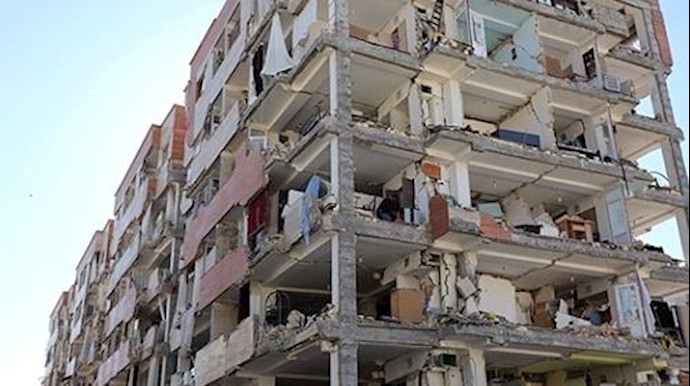
A week after a devastating earthquake hit western regions of Iran, the Islamic Republic of Iran is putting the Iranian people last – again. The number of casualties is much higher than official statistics, according to Iran’s own parliament deputies, some of whom believe more than 1,000 people died in the an event described as “apocalyptic.” Eyewitnesses put the casualty figure closer to 3,000.
Days after the 7.3 magnitude earthquake hit Kermanshah province, reports continued to surface about the incompetence and inaction of Iranian authorities. Exhausted and exposed to freezing cold, survivors of the earthquake continued to seek food and shelter days after the quake, with little or no government support.
“No state-run enterprise is helping. People are helping people,” said Ayasheh Karami, 60, standing amid the ruins of her house, according to LA Times. The scale of the disaster is extensive. Sadly, people did not just die of the earthquake. Many survivors died later due to lack of relief efforts and horrendous mismanagement; A large number of injured people died due to insufficient care at hospitals and lack of blood supply or even serum injections. Several people froze to death after being rendered homeless, with three young children and a woman among them.
“In rural areas, 10 kilometers north of Sarpol-e-Zahab, where the AFP (Agence France Presse) team was passing through, most of the aid distributed to people on Wednesday belonged to private individuals,” the agency said. Most of the aid that gets to the region comes from individual Iranians, not the government. Meanwhile, the establishment’s suppressive forces have prevented the arrival of aid to Sarpol-e-Zahab, and have confiscated donations off trucks and vehicles. At the same time, the Islamic Republic’s forces confiscate and later sell these products, like water, tents and food, at a profit. What is worse, the Islamic Republic is refusing international help for the region.
Iran has seen a large number of earthquakes. Over 26,000 people were killed in an earthquake in 2003 in Bam in the south-eastern region of the country. In 1990, more than 50,000 people died in Rudbar when a 7.4 magnitude earthquake struck the north-western part of the country.
That means any government in Iran should by now have the competence and expertise to deal with such recurring disasters. In Japan, for example, intentional and effective policies have been put into place to protect citizens against earthquakes. But the Islamic Republic’s establishment puts its own security and survival before the welfare of the Iranian people. Authorities spend much of their time intimidating and executing people in Iran while usurping national wealth and channeling it into the Islamic Revolutionary Guard Corps (IRGC) to pay for regional designs and proxies some of which are designated as terrorist groups.
Dr. Majid Rafizadeh, Contributor
President of the International American Council and Board Member of the US-Middle East Chamber of Business and Commerce and Harvard IR.