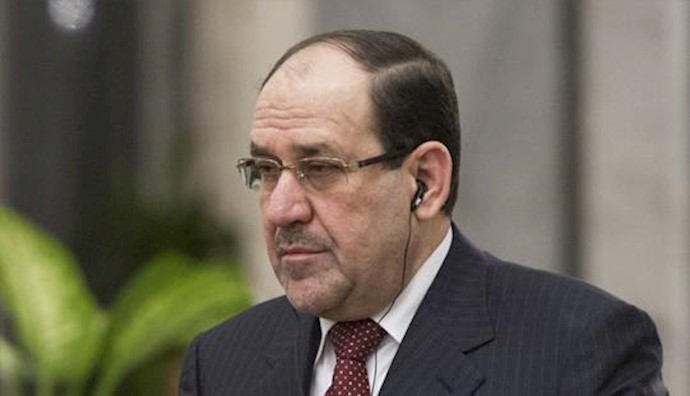
Foreign Policy, 24 June 2014 – The Obama administration and its most important Middle Eastern allies believe that Iraqi Prime Minister Nouri al-Maliki has to go.
The question now is who will replace him — and whether that leader can unify his broken country against the existential threat posed by the militants advancing on Baghdad.
Secretary of State John Kerry made a rare visit to the semi-independent Kurdish region of northern Iraq last Tuesday to gauge whether Kurdish leaders are willing to join a new unity government in Baghdad that would give more power to the Kurds and Sunnis, who Maliki systematically alienated.
The head of the Kurdish Regional Government, Masoud Barzani, was decidedly non-committal.
The country is “facing a new reality and a new Iraq,” Barzani said. That new Iraq will almost certainly be led by someone other than Maliki, who is widely seen as too toxic. Maliki, a hardline Shiite, has feuded for years with the Kurds over how to divide Iraq’s oil riches and angered the Sunni minority by arresting the community’s political leaders, replacing skilled Sunni military commanders with Shiite loyalists, and cutting off funding to the Sunni tribal leaders whose fighters once helped U.S. military forces oust a previous iteration of al Qaeda from its strongholds in western Iraq.
Still, finding a replacement acceptable to all of Iraq’s sects and political parties will be an extraordinarily difficult task because of the number of boxes the potential leader must check.
He has to be a Shiite, but not one as harshly anti-Sunni as Maliki.