by Amir Basiri
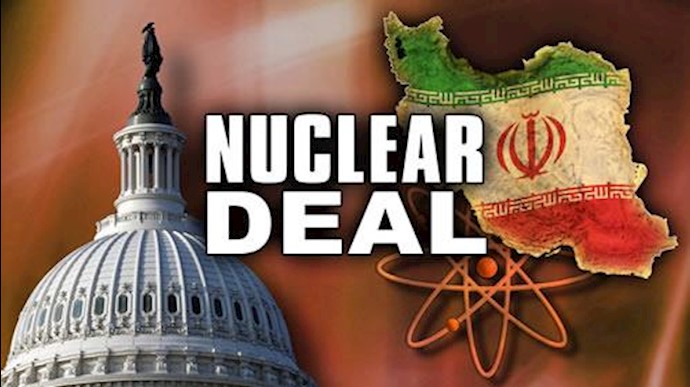
Washington Examiner, September 19, 2017 – “We in the UK feel that Iran – a country of 80 million people, many of them young and potentially liberal – could be won over,” British Foreign Minister Boris Johnson recently said at a joint press conference with his American counterpart in which they discussed the agreement that aims to block Iran’s path to nuclear weapons, and Iran’s destabilizing role in the Middle East region.
Johnson’s assessment is correct. However, the conclusion he comes to is flawed. “I think it is important [the Iranian people] see there are benefits from the JCPOA,” he added, using the acronym for the Joint Comprehensive Plan of Action, as the Iranian nuclear deal is formally known.
Surely, the JCPOA has yielded economic benefits for Iran by unfreezing billions of dollars’ worth of assets and lifting sanctions that had brought the regime back to the negotiation table in the first place. But none of those benefits have trickled down to the masses and not much has changed for average Iranians.
That’s because the Iranian regime is more concerned with maintaining its hold on power inside and outside the country than rebuilding its bankrupt economy. It has therefore used the bonanza resulting from the nuclear deal to expand its forays in the region, develop and test ballistic missiles, and increase its military budget.
A considerable percentage of Iran’s financial and economic institutions is under the strict control of the Revolutionary Guards, an entity that is renowned and sanctioned for its terrorist intervention in neighboring countries and its human rights abuses at home. The Guards have absorbed the benefits of the agreement and used it to further tighten the noose around the country’s private sector, making it even harder for ordinary people to do business in the country.
So how do you win over the Iranian people? Definitely not by trying to sell an agreement that has only empowered the same institutions and apparatus that have cracked down on their freedoms and livelihoods in the past two years.
In this regard, Johnson can learn a lesson from former President Barack Obama, who tested the failed approach of disregarding the needs of the Iranian people and giving incentives to the regime to its fullest during his tenure. In 2009, when protests erupted across the country, the U.S. decided to stand aside for fear of upsetting the regime. It also decided to take a hands-off approach towards Iran’s regional adventurism, which is being directly paid out of the pockets of the Iranian people. As a result, the former president has earned a reputation among Iranians, but not a positive one.
It’s time for the international community to show that it sides with the Iranian people, the majority of whom are fed up with their rulers and would want nothing more than regime change. There will be an opportunity to manifest this intention this week as world leaders gather at the United Nations General Assembly in New York to discuss global issues.
Also attending will be Iranian President Hassan Rouhani, whose presence will be protected by thousands of Iranian dissidents who will be gathering outside the U.N. headquarters. Diplomats and heads of state will have a chance to send a strong message to the Iranian people and give them a heart that the world stands with them in their aspirations for freedom and democracy.
Instead of standing for photo ops with the president of the world’s leading state sponsor of terrorism and exploring possibilities for striking economic deals with the Revolutionary Guards, they should make it clear that the international community stands united in holding Iran to account for its crimes against its own people and its affronts to universal norms and values. And those commitments should be backed by concrete measures, such as imposing sanctions on institutions and officials who are involved in trampling the rights of the Iranian people.
As history has shown, the best way to strengthen ties with a nation that is ruled by a tyrannical regime is by reaching out to the people, not the rulers.
Amir Basiri (@amir_bas) is a contributor to the Washington Examiner’s Beltway Confidential blog. He is an Iranian human rights activist.