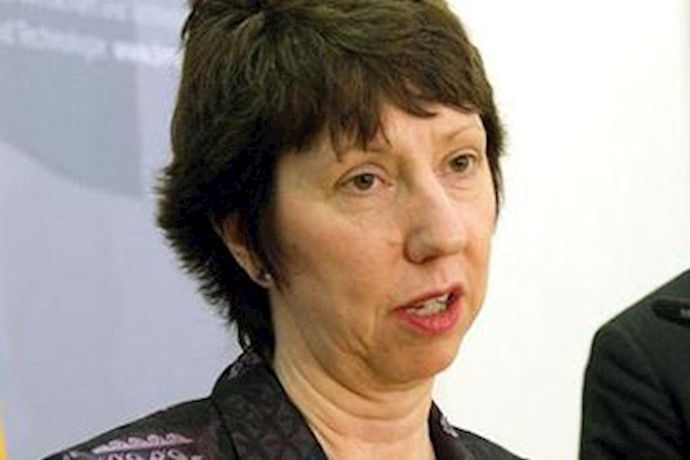
Catherine Ashton
EU High Representative for Foreign Affairs and Security Policy and
Vice President of the European Commission
European Parliament
Brussels, 01 February 2012
The Iranian nuclear programme is a very serious concern for the EU and the international community as a whole. As you know EU Foreign Ministers discussed the issue in the context of agreeing new sanctions on 23 January.
We are committed to maintaining the pressure on Iranian authorities to comply with their international obligations. This forms a key part of our ‘twin track’ approach along with the E3+3 process which I lead.
We have had several UNSC Resolutions, but in spite of them Iran continues to violate its obligations by not fully co-operating with the IAEA and by accelerating the expansion of its nuclear programme. In early January, Iran started operations to enrich uranium to a level of near 20% at the underground facility near Qom, a site controlled by the Iranian military.
For a number of years serious concerns have been expressed concerning the lack of Iranian co-operation to resolve outstanding issues, including those pointing to a military dimension to Iran’s nuclear programme.
The IAEA report of November 2011 presented findings on Iranian activities relating to the development of military nuclear technology. On this basis, the IAEA Board of Governors adopted, by overwhelming majority, a resolution expressing increasing concerns on the Iranian nuclear programme.
I and the EU remain fully committed to efforts aimed at achieving a diplomatic solution to the Iranian nuclear issue based on the twin-track approach. I have written to Dr Jalili setting out proposals which would allow Iran to draw benefits in the nuclear, political and economic field. Despite reminders, so far I have received no response to proposals to enter into a confidence building process based on reciprocity and a step-by-step approach.
The EU has always expressed its readiness to address, in the framework of a confidence building process, other issues of concern, which may be of interest for Iran, for instance co-operation in the area of counter-narcotics.
Be assured that I continue to use every opportunity to reiterate this message to the Iranian side, most recently in a series of contacts with Iranian Foreign Minister Salehi.
In parallel, I am using my contacts with third countries, particularly Turkey, to pass the message to Iran that the door remains open for negotiations through a confidence building process, which could be launched once Iran demonstrates its readiness to do so.
It was against this background that the Council decided to adopt further restrictive measures against Iran at the last Foreign Affairs Council. This was a very important step which clearly demonstrated that EU is united and is taking the lead.
The measures are designated to significantly affect Iran’s financial capacity to pursue its nuclear programme, by curtailing its revenue from crude oil exports.
The sanctions on oil are of particular significance because of their effect on the revenues of the Iranian government. Oil exports count for approximately 80% of Iran’s exports and 70% of the government’s revenues. The EU imports amounted to
20% of Iran’s oil exports. So by targeting this important source of revenue, we are strongly increasing pressure on the Iranian government, whilst avoiding negative effects as far as possible on the wider Iranian population.
The EU does not stand alone in this effort. UN sanctions continue be in force. On 31
December last year the United States decided to strengthen further its sanctions against Iran, targeting in particular the Iranian financial system and its revenues from different sources, including from oil exports.
We now need to convince like minded countries, in particular those which import oil from Iran, to take similar steps and consider reducing their import of Iranian oil. This will maximise the effect of the sanctions on Iran.
The prohibition on the import of Iranian oil is done in a phased manner, allowing us to adjust to the new situation. A review has been built-in for the EU to take stock of the effect of the measure in the course of the coming months and address any problem that may arise. By doing so, we have ensured that the EU and all of its Member States will be able to have the time and the means to adjust and ensure the continuity of energy supplies.
We also continue to harbour grave concerns regarding the human rights situation in Iran. This relates in particular the ongoing repression of political opposition, but also the increasing and excessive application of the death penalty.
In reaction to the repression and the dramatic increase in executions, there is since April 2011 also an EU sanctions regime against Iran that addresses the human rights situation. The sanctions target those persons complicit in or responsible for these grave human rights violations. Since the measures were strengthened in October of last year they now include 61 listed persons. A prohibition on the supply of equipment that can be used for repression is also part of our sanctions on Iran.