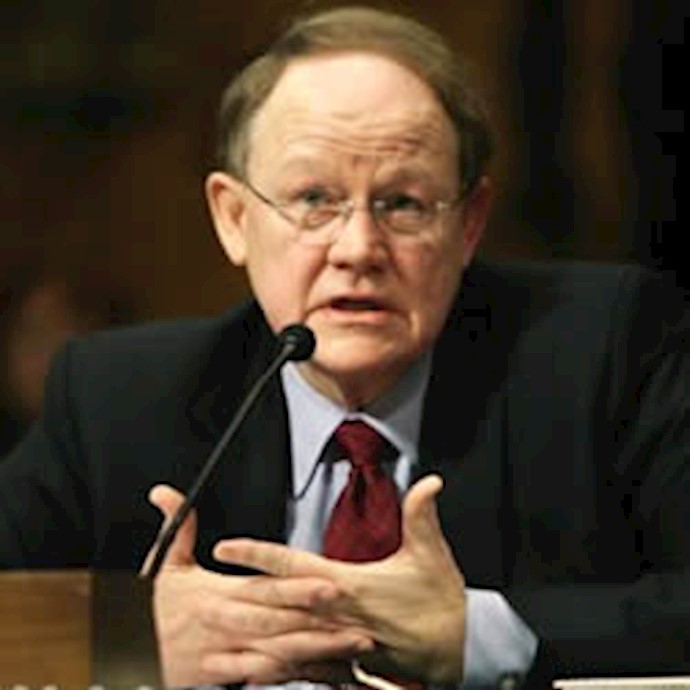
In an interview with CNN LATE EDITION, the director of US National Intelligence, Admiral Mike McConnell warned that the Iranian regime might have started construction of nuclear warhead, that was why that regime’s threat was still immutable and the sanctions would continue.
WOLF BLITZER: As you know, the national intelligence estimate on Iran came out back in November. And it has been used by many around the world to say this is not as much of a crisis as the United States is trying to make it to be, the whole controversy about Iran’s nuclear program.
Because the NIE said this. “We judge with his confidence that, in the fall of 2003, Tehran halted its nuclear weapons program.”
Now I know you have voiced some regret at the language in this intelligence estimate. Give the American people your best sense, right now, of the state of Iran’s nuclear program, particularly whether it is a threat.
MCCONNELL: Let me correct something you said. And I did not say it halted a nuclear weapons program. What it said is it halted the design of — a specific design of a nuclear warhead.
A program has to have fissile material. They’re continuing to do that. You have to have a means of delivery, ballistic missiles. They’re continuing to do that.
So the hardest part in that three-part equation is fissile material, and they’re continuing.
You know, I went back to see, because I was out of government at the time; in 2001, we did an estimate. We did an estimate; and then, last year, at the end of the year, we did an estimate.
And our estimate for when they would have nuclear weapons hasn’t changed throughout that period, 2010 to 2015 — probably in the middle portion of that is most likely.
So the threat continues. They canceled a very specific portion of it, or halted, I should say. And what were the circumstances?
In 2003, the U.S. had just — with the allies — had just invaded Iraq, and significant pressure was being applied to the Iranian government.
So I think that activity and the pressure caused them to halt a very specific portion. It was secret. They’ve never admitted it. And, for all we know, they could have turned it back on. We are doing everything we can to understand that, but we don’t have perfect knowledge.
BLITZER: And so, in your estimation, has the international reaction to this report, which is to say, it’s OK, we can take more time; everybody can calm down a little bit; the Bush administration’s pushing too hard for sanctions and further — is the international reaction to the NIE — has it been counterproductive to what you think needs to be done to avert a threat?
MCCONNELL: I think the international community overreacted. When you quoted what the NIE said, many heard it that way. And I think they, sort of, took a deep breath and overreacted. However, I would point out that the permanent five, China, Russia, France, U.K, and the United States, plus one, Germany, have now agreed to continuing sanctions.
So I think, after the initial “what is this; what does it mean,” we’ve, sort of, gotten beyond it. And I think sanctions will continue.