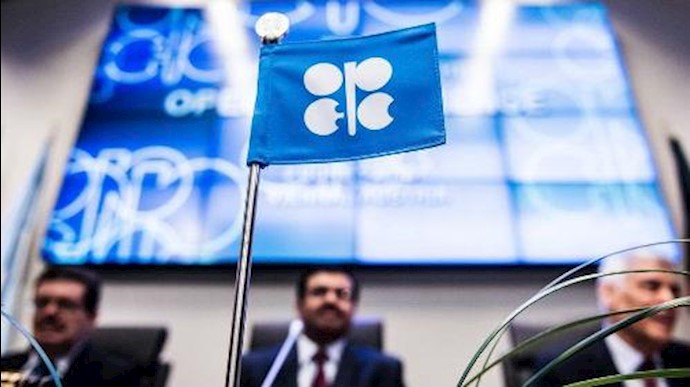
VIENNA- AP reported, OPEC oil ministers ended a meeting Thursday without reaching any kind of consensus on regulating the price and supply of crude, a result that triggered an immediate drop in energy markets.
As the ministers gathered in Vienna, comments by some suggested that the oil cartel would send a message of unity on regulating the market after not being able to do so for years.
But a statement read at the end of their meeting made no concrete pledges, emphasizing only the need for members to work for a stable market.
The price of oil fell sharply upon the news. The U.S. benchmark was down 88 cents at $48.14 a barrel.
For decades, the 13-nation cartel was able to regulate prices by throttling or increasing production. But attempts to impose production ceilings have foundered over recent years, with countries ignoring them and producing as much they wanted or could. And outside players increasing their market share, recent meetings have failed to re-impose unity.
Thursday’s events suggested OPEC was no closer to re-asserting its unity and restoring its image as the major player in determining oil prices for the rest of the world.
One idea was to abandon a firm production target. Experts say OPEC countries could have agreed on a sliding ceiling that could shift between two benchmarks, both above 30 million barrels a day.
That could address Iranian resistance to curbing its output. Since the lifting of nuclear-related sanctions this year, Iranian production has roared back to nearly four million barrels a day, around the same level as before the imposition of the sanctions.
But the ministers were unable even to reach such a more flexible agreement.
The ministerial gathering came amid a recent recovery in the price of oil. Since touching a 13-year low early this year, it has rallied almost 90 percent to around $50 a barrel.
According to Wall Street from Vienna: OPEC broke off its meeting without reaching any new agreements on oil production, continuing a hands-off policy that members say is gradually bringing supply and demand back into balance and boosting prices.
The cartel that controls over a third of the world’s oil rejected the idea of reintroducing a collective output limit, a move that some oil producers had floated as a way to inject some discipline into the group. The Organization of the Petroleum Exporting Countries has been pumping all out for 18 months and weighing down prices with a resulting glut.
OPEC’s official communiqué from the meeting said the group will monitor the oil market and likely convene again on Nov. 30 in Vienna.
The producer group named Mohammed Barkindo of Nigeria as its new secretary-general, a position that holds sway over its Vienna bureaucracy and mediates disputes among its often-divided members.
The cartel agreed to allow Gabon to re-enter OPEC two decades after the West African nation left. With 240,000 barrels a day of production, Gabon will be OPEC’s smallest producer and 14th member.
Reuters reported, Saudi Arabia promised on Thursday not to flood the oil market with extra barrels even as OPEC failed to agree on output policy, with Iran insisting on the right to raise production steeply.
Tensions between the Saudi and Iran have been the highlights of several previous OPEC meetings, including in December 2015 when the group failed to agree on a formal output target for the first time in years.
Tensions were less acute on Thursday as Saudi Arabia’s new energy minister, Khalid al-Falih, showed Riyadh wanted to be more conciliatory and OPEC decided unanimously to appoint Nigeria’s Mohammed Barkindo as the group’s new secretary-general.
Several OPEC sources said Saudi Arabia and its Gulf allies had tried to propose a new collective ceiling in an attempt to repair OPEC’s waning importance and end a market-share battle that has sapped prices and cut investment.
But OPEC sources said the organization had failed to agree on output policy and set a new ceiling.
Despite the setback, Saudi Arabia moved to soothe market fears that failure to reach any deal would prompt OPEC’s largest producer, already pumping near record highs, to raise production further to punish rivals and gain additional market share.
“We will be very gentle in our approach and make sure we don’t shock the market in any way,” Falih told reporters.
“There is no reason to expect that Saudi Arabia is going to go on a flooding campaign,” Falih said when asked whether Saudi Arabia could add more barrels to the market.
The market has grown increasingly used to OPEC clashes over the past two years as political foes Riyadh and Tehran fight proxy wars in Syria and Yemen.
Saudi Arabia effectively scuppered plans for a global production freeze – aimed at stabilizing oil markets – in April. It said then that it would join the deal, which would also have involved non-OPEC Russia, only if Iran agreed to freeze output.
Tehran has been the main stumbling block for the Organization of the Petroleum Exporting Countries to agree on output policy over the past year as the country boosted supplies despite calls from other members for a production freeze.
Tehran argues it should be allowed to raise production to levels seen before the imposition of now-ended Western sanctions over Iran’s nuclear program.
Iranian Oil Minister Bijan Zanganeh said Tehran would not support any new collective output ceiling and wanted the debate to focus on individual country production quotas.
OPEC is pumping 32.5 million barrels per day (bpd), which would give Iran a quota of 4.7 million bpd – well above its current output of 3.8 million, according to Tehran’s estimates, and 3.5 million, based on market estimates.
POLITICAL TENSIONS
That “OPEC could not agree on a relatively benign deal which would have been constructive for price is a sign that political differences are undermining the organization”, said Gary Ross, founder of U.S.-based PIRA consultancy.
“It is bearish short-term for oil prices. But what is also important is that Saudis are not planning to flood the market and want higher prices,” he added.
Falih was the first OPEC minister to arrive in Vienna this week, signaling he takes the organization seriously despite fears among fellow members that Riyadh is no longer keen to have OPEC set output.
“There could be shorter-term situations in which, in our view, OPEC might intervene and yet other situations — such as long-term growth of marginal barrels — in which case it should not,” Falih told Argus Media ahead of the meeting.
At its previous meeting in December 2015, OPEC effectively allowed its 13 members to pump at will.
As a result, prices crashed to $27 per barrel in January, their lowest in over a decade, but have since recovered to around $50 due to global supply outages.
Until December 2015, OPEC had a ceiling of 30 million bpd – in place since December 2011, although it effectively abandoned individual production quotas years ago.
Source:AP, WSJ, Reuters, 2 June 2016