
Riyadh (AFP) – Saudi Arabia gave a royal welcome to France’s Foreign Minister Laurent Fabius during a visit that highlighted a deepening of ties with major powers beyond traditional ally the United States.
The reinforcement of links with Paris comes as Riyadh worries over an Iran nuclear deal and fights Iran-backed rebels in neighboring Yemen.
Fabius, on his Saturday-Sunday visit, was welcomed more as a head of state than a minister, meeting the entire leadership of the kingdom.
“I’m not surprised, given the momentum that the relationship has taken in the last few years,” said Asaad al-Shamlan, a political science professor at Riyadh’s Institute of Diplomatic Studies.
Fabius met King Salman, Crown Prince Moqren, Deputy Crown Prince and Interior Minister Mohammed bin Nayef, along with the king’s son Defence Minister Mohammed bin Salman, who leads the kingdom’s war against Shiite Huthi rebels in Yemen.
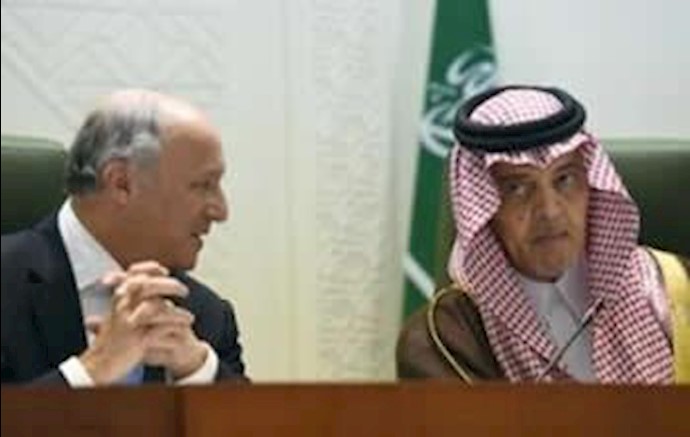
The French minister also held talks with Riyadh’s veteran Foreign Minister Prince Saud al-Faisal.
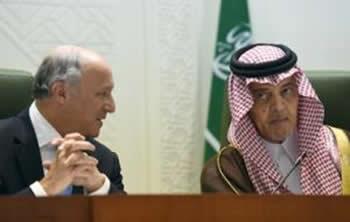
Saudi Minister of Foreign Affairs Prince Saud al-Faisal with his French counterpart Lauren Fabius
Saud, who has seen ties with France grow in recent years, stressed at a joint press conference “the friendship and trust” between the two countries.
Fabius sought to reassure his hosts over an April 2 framework agreement between major powers and Iran to curb its nuclear ambitions.
The West and Sunni Gulf states fear Tehran wants to build an atomic bomb but Shiite-dominated Iran — Saudi Arabia’s regional rival — insists its nuclear programme is peaceful.
In exchange for limits on Iran’s nuclear capabilities, the accord would lift international sanctions.
A final deal is to be reached by June 30 following further talks between Tehran and six major powers including France.
“There is panic among the Saudis because they think that Iran will use the newly-available finances that a lifting of sanctions will bring (if a final accord is reached) to extend its influence in the region,” said Joost Hiltermann of the International Crisis Group of analysts in Brussels.
Riyadh and Tehran are already divided over Syria, where Saudi Arabia backs Sunni-led rebels while Iran supports President Bashar al-Assad’s regime.
Tensions between Iran and Saudi Arabia have risen further since March 26 when a Saudi-led coalition began air strikes against Yemen’s Shiite Huthis, who Riyadh says are supported by Tehran.
Iran has rejected accusations of arming the rebels and its supreme leader Ayatollah Ali Khamenei has condemned the air strikes as “criminal acts”.
Fabius did not announce any military assistance for the Saudi-led coalition but said he came “to demonstrate our support, especially political”.
Saudi Arabia fears that if too much of Iran’s nuclear program is left intact, Tehran will still have the ability to obtain an atomic bomb, and there are concerns that Riyadh could seek its own nuclear capability.
Analysts say Paris has taken a harder stance than Washington in the nuclear talks, to the satisfaction of Gulf nations.