AP, Washington, 30 Jan 2012 – A top Senate Democrat and Republican on Monday offered a bill to impose sweeping new penalties on Tehran and thwart its alleged nuclear ambitions.
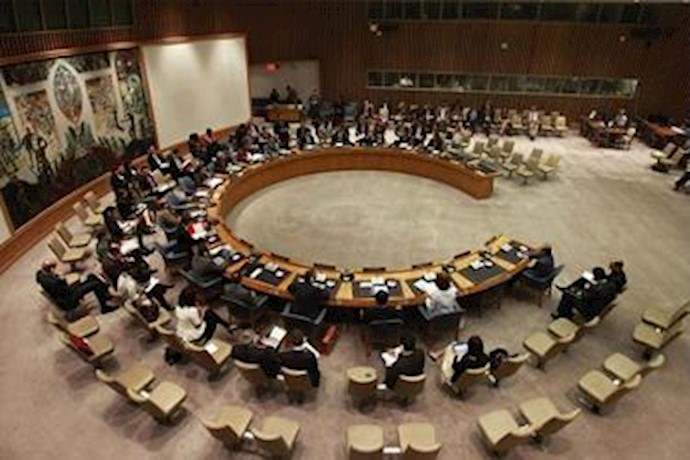
Senate BankAFP, United Nations, 31 Jan 2012 – A draft UN resolution on Syria seen by AFP Tuesday calls for the regime to put an immediate stop to violence against protesters and for President Bashar al-Assad to hand power to his deputy.
The text also stresses there will be no foreign military intervention in a conflict that the United Nations says has killed more than 5,400 people in the past 10 months.
It demands that ‘the Syrian government immediately puts an end to all human rights violations and attacks against those exercising their rights to freedom of expression, peaceful assembly and association’.
It calls on Assad to delegate his ‘full authority to his deputy’ and then to form a national unity government leading to ‘transparent and free elections under Arab and international supervision’.
The text insists it does not compel states ‘to resort to the use of force, or the threat of force’, which a diplomat said was a statement aimed at answering the concerns of Russia and China.
Russia, a veto-wielding UN Security Council member, has exasperated the West by insisting it will not back a resolution calling on Assad to step down.
China and Russia used their veto powers as permanent members of the council to block a previous resolution on Syria.
US Secretary of State Hillary Clinton, the head of the Arab League and the foreign ministers of Britain and France were gathering in New York on Tuesday to push forward the UN resolution and persuade Russia to drop its opposition.
ing Committee Chairman Tim Johnson, a Democrat, and Alabama Sen. Richard Shelby, the panel’s top Republican, said they had agreed on the measure that would target Iran’s Revolutionary Guard Corps, require companies that trade on the U.S. stock exchange to disclose any Iran-related business to the Securities and Exchange Commission, and expand penalties for energy and uranium mining joint ventures with Tehran.
The bill also would deny visas and freeze assets on individuals and companies that supply Iran with technology that could be used to crack down on its citizens, such as tear gas, rubber bullets and surveillance equipment. Johnson and Shelby said their committee would consider the legislation on Thursday.’
A nuclear-armed Iran would represent a grave threat to regional peace and international security,’ Johnson said in a joint statement with Shelby. ‘Iran’s continuing defiance of its international legal obligations and refusal to come clean on its nuclear program underscore the need to further isolate Iran and its leaders.’
Shelby said the bill ‘sends a clear signal through strong measures that Iran must abandon its nuclear weapons program and its designs for the spread of international terror.’ Iran denies that its nuclear development program is to produce uranium for nonmilitary uses, not bombs.
A report in November suggested that some of the Islamic Republic’s alleged experiments could have no other purpose than developing nuclear weapons. Iran contends that its program is designed to generate electricity, not build weapons.
A U.N. inspection team currently is in the country. Both the Obama administration and the international community have imposed tough sanctions on Iran.
Johnson and Shelby said those penalties have been insufficient to deter Tehran from pursuing a nuclear weapon.
Among the provisions of the legislation is an expansion of U.S. sanctions to include companies involved in joint energy ventures anywhere in the world in which Tehran is a significant partner or investor.
The penalties also would apply if Iran were to receive energy technology or information that was not available to the government previously.
Penalties also would be imposed on companies involved in joint ventures with Iran in the mining, production or transportation of uranium. Individuals who agree to abandon such projects within six months would be exempt from the penalties.
The legislation would require the president to identify and designate officials, affiliates and agents of the Revolutionary Guard Corps. These individuals would be subject to sanctions and barred from the United States. Individuals or companies that engage in transactions with the Revolutionary Guard Corps, even through bartering, also would be subject to sanctions.
Penalties also would be mandatory for shippers or insurers who knowingly aid the shipment of materials that contribute to Iran’s weapons of mass destruction or terror-related activities. The bill is likely to win strong bipartisan support. Last year, the Senate voted 100-0 for a measure sponsored by Senators Bob Menendez, a Democrat, and Republican Mark Kirk to the annual defense bill that targeted financial institutions that do business with Iran’s Central Bank. President Barack Obama signed the wide-ranging defense bill on Dec. 31.