Saturday, February 07, 2009
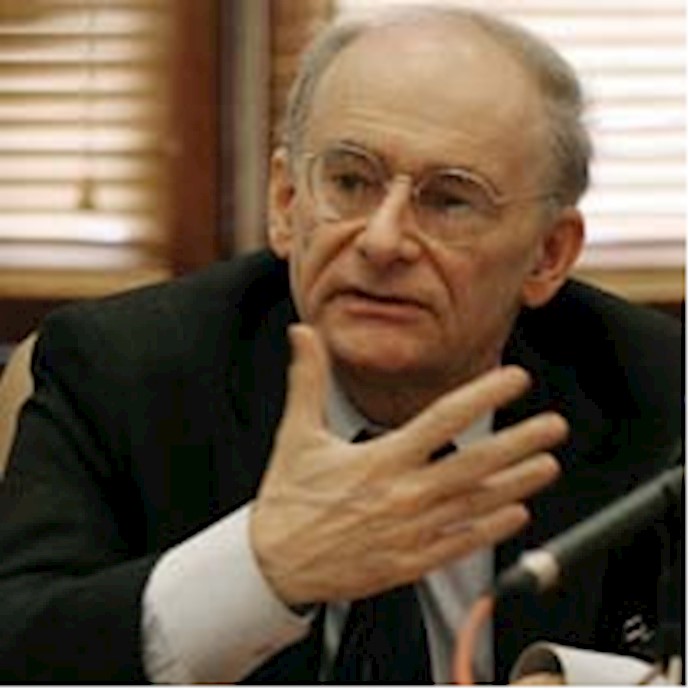
David Kilgour website, Feb. 2, 2009 (excerpts) – In a conference about the Middle East disputes at Canadian University of Manitoba in Winnipeg, professor David Matas warned of the Iranian regime’s threats agaisnt Ashraf City ans asked for the presence of the international forces in that city to guarantee its residents.
In his speech, professor Matas said: How do we protect the residents of Camp Ashraf? There are 3,500 members of the People’s Mujahadeen of Iran or Mujahadeen Al Khalq (PMOI/MEK) in Camp Ashraf, in Diyala Province, Iraq near the Iranian border. A recent decision of the European Union that the PMOI is not a terrorist organization, in principle, should make the Camp safe. But has it?
The United Kingdom in March 2001 banned the PMOI as a terrorist organization. The European Union followed suit in 2002, renewing the designation every six months.
The Proscribed Organisations Appeals Commission ordered on November 30, 2007 that the PMOI be removed from the British list of terrorist organisations. The England and Wales Court of Appeal upheld the British Commission decision on May 7, 2008.
The Court of First Instance of the European Communities on December 4, 2008 annulled what was then the most recent periodic six month renewal of designation of the Council of the European Union that the PMOI is a terrorist organization. The Council of the European Union (EU) on 26 January 2009, as it had to do to respect its Court decision, delisted the PMOI as a terrorist organisation.
The PMOI were part of the original revolutionary coalition which deposed the regime of the Shah in 1979. A Bolshevik type takeover of the revolutionary forces by the mullahs under Ayatollah Khomenei led to the eviction of the PMOI from the government and their slaughter in the thousands. The remnant fled Iran in 1981 and set up headquarters in Paris, the former haven of the Ayatollah. In Paris, the PMOI organized armed attacks against the Iranian regime. The French expelled them in 1986; they relocated to Iraq, where Saddam Hussein, in the midst of war with Iran, was happy to offer them refuge.
The PMOI continued their armed attacks against the Iranian regime till June 2001 and then changed strategy, renouncing the use of force. When the Americans invaded Iraq in 2003, deposed Saddam Hussein and conducted elections, the local political forces which took over the government had a strong pro-Irani coloration, making Iraq a decidedly less friendly environment for the PMOI. The allies of Iran in the Iraqi government denounced the PMOI and threatened them with expulsion to Iran, where they face torture and death.
The Americans responded to the threats, declaring the group protected persons under the Geneva Conventions on the Law of War, and, for their own safety, collected them together in one place, Camp Ashraf, under American protection. Now the Americans forces are withdrawing from Iraq, leaving the Camp Ashraf residents to the tender mercies of the Iraqi forces and their Iranian friends.
As well as there have been many statements of high level officials in the Government of Iraq calling for expulsion which give no hint of voluntariness. Moreover, the Government of Iraq has far from complete control of Iraqi territory. The Government of Iraq, it seems, is neither able nor willing to respect its official position.
The legal foundation for the presence of American forces in Iraq in December 2008 shifted from a United Nations Security Council resolution to a US Iraqi Status of Forces Agreement. Camp Ashraf dodged a bullet last December, even though security for the Camp went from American to Iraqi control, because the American forces kept observers in the Iraqi forces patrolling Camp Ashraf. The Iraqi government was not going to violate its commitments to the US from day one, under American noses.
Keeping Camp Ashraf residents in Iraq has political benefits for the PMOI. Within Iran itself, opposition to the government is impossible. A political opposition to Iran on the border in Iraq is the next best thing, a thorn in the side of the Iran of the mullahs.
Neither the Iranian regime nor their friends in the Iraqi government are impressed by the EU delisting. For the Iranian regime and their fellow travellers in the Government of Iraq, the PMOI remain terrorists, whatever the EU says, and should still be expelled.
Terrorist designations potentially serve any one of three purposes – freezing of funds and proscription of activities, criminal prosecutions and immigration bans. The EU terrorist designation served only the first.
If the decision is to stay, the Iraqi government needs to be persuaded to drop its insistence that Camp Ashraf residents must leave Iraq. Since that insistence is based on the claim that the PMOI is a terrorist organisation, one can hope that the EU delisting decision would persuade the Iraqi government to come to the same conclusion, that the PMOI is no longer a terrorist organisation, if it ever was.
Second, the international community in general and the Americans in particular have to keep an eye on the Camp to ensure that the official promise of the Iraqi government not to expel the Camp residents to Iran is kept. At some point all American forces will leave Camp Ashraf and leave Iraq. However, Americans can remain as observers as well as trainers. There needs to be an international presence at Camp Ashraf at all times to monitor compliance with Iraqi assurances. This international presence is only a small level of protection. But it is a basic minimum if the Camp Ashraf residents are to remain in Iraq with some measure of safety.
…………………………………………………………………………………………………………….
David Matas is an international human rights lawyer based in Winnipeg, Manitoba, Canada.