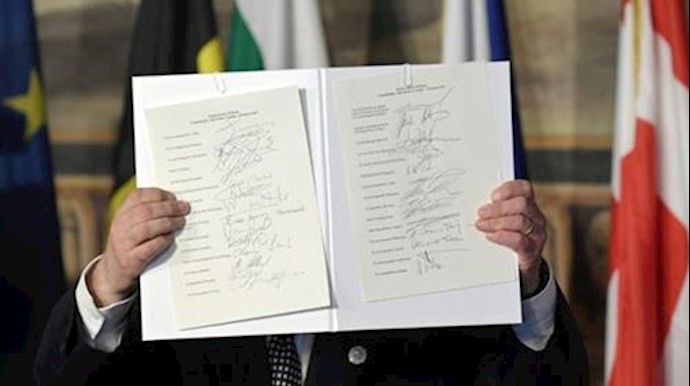
Euroscepticism, an ongoing refugee crisis, and rising populism put a damper on the EU’s 60th anniversary
I24, 03/25/2017 – It became known as the birthplace of the modern European Union – the audience chamber at the Palazzo dei Conservatori in Rome, where on March 25, 1957 representatives from France, West Germany, Italy, Belgium, Luxembourg and The Netherlands signed a treaty establishing the European Economic Community.
The Treaty of Rome, which laid the foundation for the European single market by establishing a customs union and common policies on agriculture, transport and trade, marked a shift in focus. Instead of continuing the attempt to found a Political European Community – which failed in 1954 due to fear of loss of sovereignty – it based European integration on economical reasoning, breathing new life into the process.
“Step by step, the spillover effect of integrating the markets created the need for more and more common policies, which starting from the 1990’s went into other areas,” explains Josef Janning, who heads the Berlin office of the European Council on Foreign Relations. “Equal opportunity in the workplace, health and safety standards, environmental policy – all of these were triggered by a common market.”
A lot has been achieved in the 60 years since, stresses the expert, but the fact that the EU is now seen at its weakest, battling the rise of populists and euroskeptics, puts a damper on the celebrations.
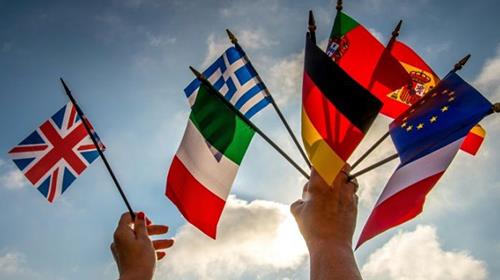
“We have united for the better. Europe is our common future,” says a draft EU declaration ahead of the bloc’s summit to mark the 60th anniversary of the Treaty of Rome
The opposition to the vision of a “United States of Europe” have never been higher, he says, “and from that perspective, one could argue that the treaty has promised something which ultimately the nations, the publics, the politicians of Europe were not able and willing to build.”
Partially to blame is the forgotten sense of community that once motivated integration proponents. With the memory of WW2 destruction still fresh in their minds, the signers of the Rome Treaty sought to base the European Union on an understanding of a shared destiny, hoping it would prevent armed conflict and inspire member states to protect one another from external threats.
“Nowadays if you look at the EU, you see a more utilitarian approach, particularly among the latest members,” notes Janning. “It’s mostly about cost and benefit, and the expectation is that ’I have to get out more than I put in’, which is a problematic argument in a community that still depends on the solidarity of its members.”
Many leaders are also unwilling to give due credit to the EU for the advantages it provides their citizens, thus further undermining its standing. “The EU is too kind, in the political sense,” argues Janning. “All other political systems demand a higher degree of loyalty from its beneficiaries, but the EU does not. Governments use it as a tool but don’t want to share the praise for it – and put the blame on Brussels when it suits them. This leaves the EU almost defenseless against accusations.”
Will there be an EU in ten years?
The greatest accomplishment of the EU, on the other hand, is its success in transforming the thinking of the younger generation in particular, which now views being European as a fact of life and finds war between European countries unimaginable.
“Europe has become so ingrained in our reality, that it takes the negation of Europe to draw people out in favor of Europe,” asserts Janning. “Populists get more people to realize how European we are and how deeply European integration has changed our lives, without us taking proper note of it.”
Yet when asked if the EU will still exist ten years from now, many young people express skepticism. “There may not be a European Union, because there’s quite a lot of controversy against it at the moment and people deciding to pull out,” said Hayley Smith, a British student visiting Berlin.
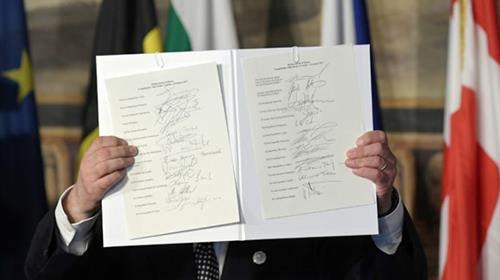
EU Parliament president Antonio Tajani holds up the new Rome declaration signed by leaders of 27 European Union countries during a summit of EU leaders to mark the 60th anniversary of the bloc’s founding Treaty of Rome, in Rome on March 25, 2017
“A lot of it would depend on how the Brexit negotiations go,” claimed Emma Underwood, another British tourist. “If Britain is made into an example and harsh sanctions are put on it, it would strengthen the EU, but if not – it could definitely weaken the whole structure.”
“It might fall apart,” admitted also Cirus Petzold, a German-Iranian law student, “but this would create a bigger problem, because it would affect European countries more than staying together.”
The best way to remind Europeans of the merits of the EU, Janning suggests half-jokingly, could be an occasional taste of what life would look like without the comforts it provides – as was the case when the Schengen System was suspended on a number of borders as a result of the refugee influx.
“All of a sudden, hundreds of thousands of people who used to easily commute across the border, experienced what it would be like if Europe did not exists,” he described. “This could bring back the idea that this is a community for a greater good – to have moments when it suddenly disappears, and you stand there and say, ’this cannot happen, this is not how I want it to be’.”
But should the current European Union indeed collapse for some reason, Janning is sure that it will be directly followed by a new union – just a smaller one and free of hubris, so as to not repeat the mistakes of its predecessor.
“The Treaty of Rome had this continental vision, that all European democracies and market economies could be part of this union. Maybe a successor to this would not be as ambitious, now that they know that going that far multiplies management and governance problems to a degree that the European Union did not survive.”