Cathy Scott-Clark and Adrian Levy
The Sunday Times, January 14, 2018 – Iran has experienced its worst civil unrest in years, triggered in part by plans to increase military spending for regional adventurism while cutting state subsidies at a time of severe economic hardship.
How would Iranians react to evidence of the Shi’ite regime’s most shocking initiative — a secret pact to rebuild al-Qaeda, the Sunni terrorist movement, and send it into Syria?
Iranian largesse has played a significant role in reviving al-Qaeda. The movement was 400 strong when the twin towers fell (according to FBI figures), splintered by the US invasion of Afghanistan and later overshadowed by Isis. But today’s al-Qaeda has rebuilt itself to the point of being able to call on tens of thousands of foot soldiers.
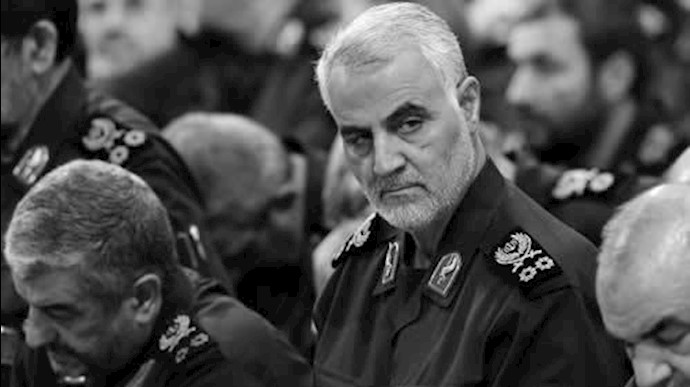
General Qassem Soleimani, head of foreign operations for Iran’s Revolutionary Guard, first offered sanctuary to Osama bin Laden’s family and al-Qaeda’s military leaders after they fled Afghanistan in 2001.
Soleimani built them a residential compound at the heart of a military training center in Tehran. From there al-Qaeda reorganized, trained and established funding networks with the help of Iran, co-ordinated multiple terrorist atrocities and supported the bloodbath against Shi’ites by al-Qaeda in Iraq, the Sunni terrorist force that was later reborn as Isis.
Today the Iran al-Qaeda alliance is thriving and focused on Syria, where al-Qaeda is resurgent. Iran spends an estimated £4.5bn a year supporting the regime of Bashar al-Assad and Soleimani has put al-Qaeda into play to assist with his maneuvering between factions, playing sides off against one another so that Iran comes out the winner.
Melding with Syrian rebels, reducing its volubility and toning down the barbarity, a reformed al-Qaeda has found in Soleimani’s expeditionary Quds Force from Iran and also in Hezbollah, his Shi’ite Lebanese allies, models for how it might evolve.
Important new evidence, including unpublished memoirs and interviews with senior al-Qaeda members and bin Laden’s family, show how Soleimani engineered this.
Al-Qaeda’s military commanders stayed in Tehran until 2015 when Soleimani flew five of them to Damascus with a remit to contact Isis fighters and leaders, encouraging splits.
US intelligence described one of them, Mohammed al-Masri, as the “most experienced and capable operational planner not in the US or allied custody”. He is also the father-in-law of bin Laden’s son and heir, Hamza.
Their work has been co-ordinated from Tehran by al-Qaeda’s overall military commander, Saif al-Adel, a former colonel in the Egyptian army. But he has clashed with Ayman al-Zawahiri, bin Laden’s successor as al-Qaeda leader.
Zawahiri is understood to be in the Pakistan capital, Karachi, and to have taken charge of Hamza bin Laden as a mascot. He had wanted the Sunni rebel forces of Isis and al-Qaeda to unify and fight. Al-Adel had urged his men to sit tight and wait for Isis to blow itself out.
“Let’s say they had a little disagreement,” said Abu Muhammad al-Maqdisi, a jihad scholar based in Jordan who acts as an emissary between the two factions. “It is still not resolved.”