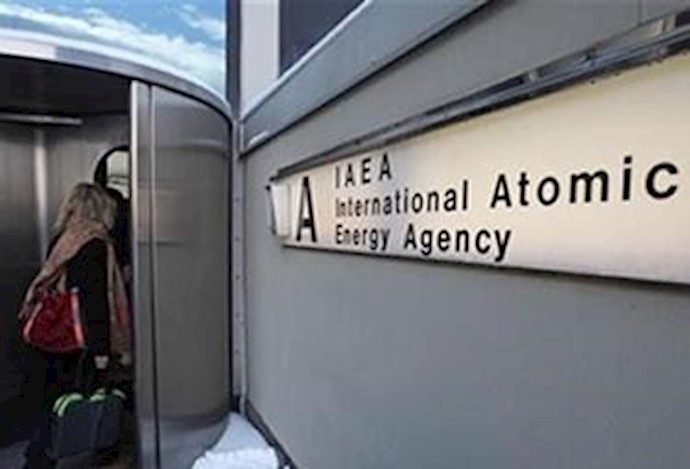
Iran faced scrutiny by the West on Wednesday after the publication of a report from the UN atomic watchdog that amounted to its starkest warning yet about the unfolding nuclear situation in the Islamic republic.
France24, 9 Nov 2011 – Iran was the object of mounting international scrutiny Wednesday in the wake of a new report from the UN atomic watchdog that cited “credible” intelligence that Iran was indeed pursuing the development of nuclear arms.
The International Atomic Energy Agency’s report amounts to the sternest warning yet about the unfolding nuclear situation in Iran, and it immediately set off a storm of diplomatic reactions; the US threatened to step up international sanctions, while Israel raised the possibility of impending military action.
In the report, the Vienna-based agency presided over by Yukiya Amano of Japan points to Iran’s “research, development and testing activities” in the aim of producing a nuclear weapon, even if specific weapons labs or the existence of a finished nuclear weapon are not mentioned.
‘No ambiguity’ in Iranian intentions
Activities cited in the 13-page annex to the report include modeling of a nuclear warhead, testing explosives at a military base near Tehran, and exploring how to arm medium-range missiles with atomic warheads.
Other findings include documents suggesting that Iran “was working on a project to secure a source of uranium suitable for use in an undisclosed enrichment program” and proof that Iran “had been provided with nuclear explosive design information”.
Iran swiftly rejected the report, which was compiled from “over a thousand pages” of documents from more than 10 foreign intelligence agencies, as well as the IAEA’s own research.
“The report of the International Atomic Energy Agency is unbalanced, unprofessional and politically motivated,” Iranian state media quoted Ali Asghar Soltanieh, Iran’s representative to the IAEA, as saying.
But according to Yves Bonnet, the president of the International Centre for Research and Studies on Terrorism, “There is no ambiguity here. Iran has made no secret of its intentions to aquire an atomic bomb.”
Bonnet also said that the well-documented presence of Russian and South Korean nuclear technicians in Iran, as well as increasing numbers of nuclear production sites in Iran, further bolster the report’s findings.
France and US warn of sanctions, Israel of military action
Reactions from Western powers were quick and sharply worded. The US and France said they could resort to tough new sanctions, while the spokesperson for EU foreign policy chief Catherine Ashton noted that the report “seriously aggravates existing concerns on the nature of the Iranian nuclear programme”.
Russia’s foreign ministry, on the other hand, declared itself “gravely disappointed and bewildered” by the report, saying that it could derail the possibility of a revival of negotiations.
Bonnet noted that the West’s efforts to curb Iran’s nuclear ambitions through diplomatic pressure and sanctions thus far have yielded little results. “The international community has tried everything — persuasion, negotiations, and then sanctions,” he assessed. “But they have been faced with an Iranian government that has presented a façade of diplomacy, but has really pursued its operations underground.”
As for Israel, officials remained tight-lipped following the publication of the report, but two days earlier, President Shimon Peres had said that an Israeli strike against Iran was looking more and more likely.
It was one of Israel’s harshest statements yet in regards to Iran, and the Iranian military’s deputy chief, Brigadier General Masoud Jasayeri, replied that Israel would face “destruction” if ever it attacked the Islamic republic.
Western allies, including the Obama administration, have maintained that airstrikes would only drive the nuclear development in Iran further underground – an opinion shared by Bonnet.
“Given how dispersed the production sites are, an Israeli operation would not be effective,” Bonnet said. “Only a toppling of the Iranian regime would work”.