The Wall Street Journal 3 April 2017 – Few wars have seen such a tangle of combatants as Syria’s, from obscure and morphing rebel groups to Russians, Turks, Kurdish and Iraqi militias. From the chaos, one clear winner is emerging.
Returning to his ancestral Syrian town of Qusayr after years away, a man named Mohammed discovered a new militia patrolling the neighborhood. Patches on the men’s camouflage uniforms called them the Islamic Resistance of Syria. Their identity became clearer when he found a notice on his house claiming it for Hezbollah, the Lebanese militant group.
“Many houses have been confiscated with notices that they’ve been reserved for this or that family,” Mohammed said.
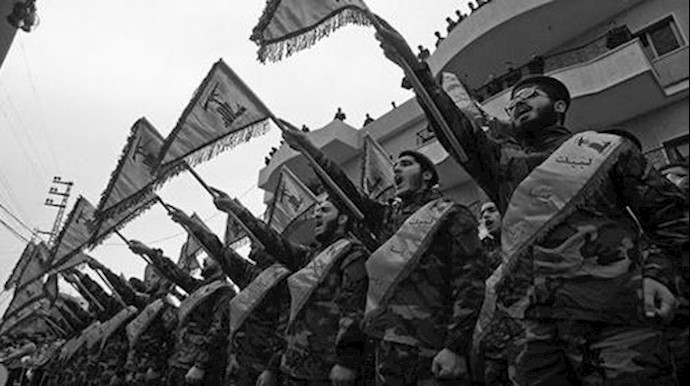
Hezbollah, founded in the early 1980s to fight Israel’s occupation of southern Lebanon, became involved in the civil war next door to protect its patrons in Damascus and a supply line of Iranian weapons. After years of growing engagement, including training thousands of mostly Shiite Muslim fighters and beginning to provide social services, Hezbollah is today stronger, more independent and in command of a new Syrian militia that its officials say is ready to be deployed to other conflicts in the region.
Hezbollah now fights alongside Russian troops, its first alliance with a global power. It was Hezbollah that devised the battlefield plan for Aleppo used by Syrian and Russian forces last year, according to Arab and U.S. officials who monitor the group.
Bassem Mroue/Associated Press A Hezbollah fighter in Syria stands by the group’s yellow flag.
Thanks to money and arms from Tehran, Hezbollah now stands almost on a par with Iran as a protector of President Bashar al-Assad’s government, and as a sponsor of Shiite fighting forces in Syria.
“It’s hard to see people rising through Syrian intelligence or military ranks without the blessing of Hezbollah or the Iranians,” said Andrew Exum, until January a U.S. deputy assistant secretary of defense for the Middle East.
With its growing might, this arch-foe of Israel, a group long labeled terrorist by the U.S., has gained a modicum of international recognition. It participated in negotiations sponsored by Russia following the rout of rebels from Aleppo. When China’s special envoy to Syria visited Lebanon in December, he carved out time to see Hezbollah’s foreign-relations chief.
Even before the Syrian civil war, Hezbollah had evolved beyond its guerrilla-group origins into a business and political enterprise that holds positions in Lebanon’s government and runs social programs such as schools and clinics. Now it is poised to capitalize on what many Middle East analysts expect will be an eventual end to the Syrian war that leaves Mr. Assad in power. Syria will have $180 billion of war-reconstruction needs, by a World Bank estimate.
“Hezbollah is well-positioned to make a lot of money” from Syrian reconstruction, said Matthew Levitt, director of the Washington Institute’s Stein Program on Counterterrorism and Intelligence, a veteran of the Treasury and State departments.
U.S. and Israeli officials have watched the growth of Hezbollah with concern, worried it could draw on its Syrian recruits to pressure Israel from a new front along the Golan Heights, captured by Israel 50 years ago. In March, Hezbollah announced the formation of a Syria-based “Brigade for the Liberation of the Golan” devoted to wresting the heights back for Syria.
“Israel knows that what has happened in Syria has changed Hezbollah, which has developed from not just defending against Israel, but attacking it,” said a senior official from an alliance of Hezbollah, Syria and Iran. “It has now developed traditional and nontraditional means of war. It fights like a guerrilla army but also like a conventional one.”
Israel hasn’t waited for a Hezbollah attack in the Golan, sending aircraft to strike Iranian shipments of sophisticated arms to Hezbollah.
Premier Benjamin Netanyahu told President Donald Trump during a February U.S. visit that Hezbollah’s expanded arsenal also endangers American warships in nearby waters, said diplomats briefed on the meeting.
The U.S. is well aware of Hezbollah’s expanding capabilities and will continue working closely with partners in the region to address threats the militant group poses, a State Department official said, adding that disrupting Hezbollah’s terrorist and military capabilities was a top U.S. priority.