Iran’s sponsorship of terrorist groups and activities has “only increased” in the year since Tehran reached a nuclear deal with world powers, Matthew Levitt, director of the Washington Institute’s counterterrorism and intelligence program, wrote in a policy analysis published Friday. Citing promises by U.S. officials to curb Iranian aggression irrespective of the nuclear deal, Levitt argued that the upcoming anniversary of the agreement presents the “perfect opportunity to reassess the regime’s menacing behavior and take steps to hold it accountable.”
Levitt noted that in February, a month after the nuclear deal was implemented, Director of National Intelligence James Clapper told the Senate that Iran “continues to exert its influence in regional crises in the Middle East through the International Revolutionary Guard Corps-Qods Force (IRGC-QF), its terrorist partner Lebanese Hezbollah, and proxy groups. … Iran and Hezbollah remain a continuing terrorist threat to U.S. interests and partners worldwide.” The following month, U.S. Central Command chief Gen. Joseph Votel said that Iran had become “more aggressive in the days since the agreement.”
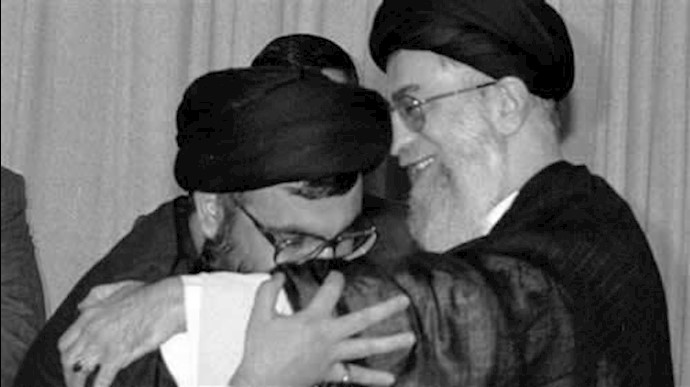
Levitt added that Iran continues extensively supporting Hezbollah, with the Lebanese terrorist group’s leader Hassan Nasrallah admitting last month that “Hezbollah gets its money and arms from Iran, and as long as Iran has money, so does Hezbollah.” Hezbollah has been involved in multiple terrorist plots since the nuclear deal was reached, and the group has expended significant resources in Iraq and Syria, giving a crucial lifeline to the Assad regime. It also trained and directed a Palestinian terrorist cell in the West Bank, part of what a top Israeli official in February described as Iran’s efforts to build an “international terror network.”
After listing terrorist activity linked to Iran in the Gulf states and beyond the Middle East, including in Kenya and Nigeria, Levitt quoted Treasury Secretary Jack Lew, who said three months before the nuclear deal was announced: “Make no mistake: deal or no deal, we will continue to use all our available tools, including sanctions, to counter Iran’s menacing behavior.”
Lew’s pledge was similar to one made by President Barack Obama before Gulf leaders at Camp David in April. “We have to be effective in our defenses and hold Iran to account where it is acting in ways that are contrary to international rules and norms,” Obama told Gulf Cooperation Council partners at the time.
Iran’s failure to curb its belligerent behavior was confirmed by senior Treasury official Adam Szubin, who said in June, “As we expected, Iran has not moderated this conduct since the implementation of the [nuclear deal].”
Given this behavior and “the administration’s repeated insistence that it would hold Tehran’s feet to the fire on these very issues, the [nuclear deal]’s first anniversary presents Washington with a perfect opportunity to reassess the regime’s menacing behavior and take steps to hold it accountable,” Levitt concluded.
The State Department’s annual report on global terrorist activity, which was released last month, stated that Iran “remains the foremost state sponsor of terrorism in 2015.”
The report noted that Iran provides “a range of support, including financial, training, and equipment, to groups around the world.”
Secretary of State John Kerry admitted in an interview in January that some of the billions of dollars that are to be freed up after the lifting of nuclear sanctions on Iran “will end up in the hands of the IRGC or other entities, some of which are labeled terrorists.”
Source: The Tower, 8 July 2016